










1
of
1
Genna Remembers
 Book Hero Magic crafted this summary to help describe this book. While it's new and still
learning, it may not be perfect - your
feedback is welcome!
Summary
Book Hero Magic crafted this summary to help describe this book. While it's new and still
learning, it may not be perfect - your
feedback is welcome!
Summary
Read More
Format: Hardback
TEMPORARILY OUT OF STOCK
Please add to wishlist to be notified when back in stock
Sorry, we're currently out of stock of Genna Remembers. Please add to your Wishlist and we'll send you an email as soon as it's back in stock.
Latest News
Why you need to start a family boardgame night
Board games aren't just for adults, they're perfect to do as a family. Here's why...
From Page to Panel: The Rise of Graphic Novel Adaptations
Discover why graphic novel adaptations are booming, from ‘Dune’ and ‘Sapiens’ to ‘Call Me by...
Why You Should Read Folk Horror!
If you're looking for a new read and haven't yet tried Folk Horror as a...
Movie Review on The End of Oak Street
Lizzy and Roopa are sharing their reviews of The End of Oak Street, a movie...
We Expanded Our Board Game Range…400+ New Games in Stock Now!
Board game week has arrived at Book Hero! 🎲 We’ve expanded our range, with 400...
See more
Book Hero Magic formatted this description to make it easier to read. While it's new and
still learning, it may not be perfect - your
feedback is welcome!
Description
Half a century ago, I left a country, the red colour of which dominated a large portion of the world map. One way or another, the fate of almost every single person described in this book is forever linked with that now non-existent empire. Many of them ended up beyond its borders too. Cultures and traditions, and certainly not least of all, a Soviet mentality, couldn't have just left them without a trace. Having been transplanted into a different environment, they had to play the role of themselves apart from certain corrections with regard to the tastes and customs of a new society. Nevertheless, every one of them, both those who left the Soviet Union and those who stayed behind, were forever linked by one common united phenomenon: they all belonged to the Soviet school of chess.
This school of chess was born in the 1920s, but it only began to count its true years starting in 1945, when the representatives of the Soviet Union dominated an American squad in a team match. Led by Mikhail Botvinnik, Soviet Grandmasters conquered and ruled the world, save for a short Fischer period, over the course of that same half century. In chess, as well as ballet or music, the word "Soviet" was actually a synonym for the highest quality interpretation of the discipline.
The Soviet Union provided unheard-of conditions for their players, which were of a sort their colleagues in the West dare not even dream. Grandmasters and even Masters received a regular salary just for their professional qualifications, thereby raising the prestige of a chess player to unbelievable heights.
It was a time when any finish in an international tournament, aside from first, was almost considered a failure for Soviet players, and upon their return to Moscow, they had to write an official explanation to the Chess Federation or the Sports Committee.
The isolation of the country, separated from the rest of the world by an Iron Curtain, was another reason why talent and energy often manifested themselves in relatively neutral fields.
Still, if with music, cinematography, philosophy, or history, the Soviet people were raised on a strict diet that contained multiple restrictions, this did not apply to chess. Grandmasters and Masters, all varied in terms of their upbringing, education, and mentality, were judged solely on their talent and mastery at the end of the day. Maybe that's why the Soviet school of chess was full of such improbable variety, not only in terms of the style of play of its representatives but also their different personality types.
Built was a gigantic chess pyramid, at the base of which were school championships, followed by district ones. Later, city championships, regions, republics, and finally—the ultimate cherry on top—the national event itself. The Championships of the Soviet Union were in no way inferior to the strongest international tournaments, and collections of the games played there were published as separate publications in the West.
That huge brotherhood of chess contained its very own hierarchy within. Among the millions and multitudes of parishioners—fans of the game—there were the priests: candidate masters. Highly respected were the cardinals: masters. As for Grandmasters, though, well...they were true Gods. Every person in the USSR knew their names, and those names resonated with just as much adoration and admiration as those of the nation's other darlings—the country's best hockey players. In those days, the coming of the American genius only served to strengthen the interest and attention of society towards chess, never mind the fact that by that point it had already been fully saturated by it.
The presence of tons of spectators at a chess tournament in Moscow, as shown in the series The Queen's Gambit, is in no way an exaggeration. That truly was the golden age of chess.
Under the constant eye and control of the government, chess in the USSR was closely interwoven with politics, much like everything else in that vanished country. Concurrently, the closed and isolated society in which it was born only served to enable its development, creating its very own type of culture—the giant world of Soviet chess.
I was never indifferent to the past. Today, when there is that much more of it than the future, this feeling has become all the sharper. The faster the twentieth century sprints away from us, and the thicker the grass of forgetting grows, soon enough, under the verified power of the most powerful engines, that world of chess will be gone as well.
It was an intriguing and colourful world, and I saw it as my duty to not let it disappear into that empty abyss.
Genna Remembers by Genna Sosonko - May 2021
Book Hero Magic summarised reviews for this book. While it's new and still learning, it may not be perfect - your feedback is welcome! HOW HAS THIS BEEN REVIEWED?
Genna Remembers by Genna Sosonko, published by Thinkers Publishing, delves into the Soviet chess dynasty through the eyes of those who were part of it. While previous works by Sosonko focused on Soviet World Champions, this book offers insights into other grandmasters like Leonid Shamkovich and Igor Ivanov, as well as the tragic story of Sergey Nikolaev. The book is praised for enhancing an understanding of chess culture and history, making it an engaging read for enthusiasts.

Book Details
INFORMATION
ISBN: 9789464201192
Publisher: Thinkers Publishing
Format: Hardback
Date Published: 05 July 2021
Country: Belgium
Imprint: Thinkers Publishing
Edition: New edition
Illustration: Illustrations
Audience: General / adult
DIMENSIONS
Width: 172.0mm
Height: 237.0mm
Weight: 600g
Pages: 258
Collections
About the Author
Gennadi Sosonko was born in Troitsk in the Chelyabinsk region and learned to play chess at the age of ten in Leningrad, to which his family returned after the war. He trained in the Pioneers’ Palace, where he was mentored by Vladimir Zak, Vladimir Kirillov, Vasily Byvshev and Alexander Cherepov. Later he was taught by Semyon Furman in the Chigorin Chess Club. Genna emigrated from the USSR in 1972 and settled in the Netherlands. Genna became an international master in 1974 and a grandmaster in1976. He played for the Netherlands from 1974; in eleven Olympiads he had the superb overall score of +28 -4 =64. In the 1990s and 2000s, he was the Dutch team captain. Genna Sosonko is a two-time Dutch champion (1973 and 1978), a two-time winner of the tournament at Wijk aan Zee (1978 and 1981), winner of tournaments in Barcelona and Lugano in 1976, Nijmegen in 1978 and Polanica-Zdrój in 1993, and a prizewinner in Tilburg, New York, Bad Lauterberg, São Paulo, London and Reykjavik. From 1975 to 1982 he was one of the top twenty players in the world, achieving his highest rating of 2595 in January 1981. He has made a significant contribution to opening theory, especially to his favourite Catalan. In 2004 he stopped competing to focus on journalism and literature. He is the author of wonderful memoirs which were published in several languages. In recent years he has often worked as a commentator on tournaments featuring the world’s leading grandmasters, describing their battles in English, Dutch and Russian.
Also by Genna Sosonko
View all-

Genna Remembers
Half a century ago, I left a country, the red colour of which dominated a large portion of the world map. One way or another, the fate of almost every single person described in this book is forever linked with that now non-existent empire. Many of them ended up beyond its borders too. Cultures and traditions, and certainly not least...PaperbackSold Out
More from Cooking & Food
View all-
 New Release
Soph's Plant Kitchen 30 in 30: 30g of protein, 30 minutes or less
An essential cookbook for anyone looking to increase the amount of plant protein and fibre they eat without spending hours in the kitchen. Instagram sensation and Sunday Times bestselling author @Sophsplantkitchen has created her very best plant-based, high fibre recipes: all with at least 30 grammes of protein, all on the table in 30 minutes or less and all mouth-wateringly...Hardback$4800Elsewhere:$6000Unit price /UnavailableIn StockShips tomorrow -
Lunchbox Bible
From the team behind the bestselling sensation Baby Food Bible, Lunchbox Bible is your go-to recipe book for feeding children healthy, allergen-friendly, and nutritionist-approved food that’s guaranteed to please. With 75 recipes and a visual library containing 75 different lunchboxes, this comprehensive guide has been carefully created with time-poor parents in mind. The recipes are simple, quick, nutrient-dense, and get...Hardback$4700Elsewhere:$5999Unit price /UnavailableIn StockShips tomorrow -

 New Release
Disney Moana: The Official Cookbook
Embark on a culinary adventure with Moana of Motunui with Pacific recipes inspired by Moana and Moana 2! After a long day of sailing to see how far you’ll go or keeping the demigod Maui out of trouble with Te Fiti, catch a break with the delicious dishes in Moana: The Official Cookbook! Featuring more than 50 recipes spanning the...Hardback$4499Elsewhere:$5299Unit price /UnavailableIn StockShips tomorrow -
 New Release
Fitwaffle's Easy 6
Discover how simple cooking can be every day with over 100 easy, tasty recipes using only 6 ingredients. "My mission is simple. I want to help people feel more confident in the kitchen and show that baking and cooking don't need to be complicated. Whether you're brand new in the kitchen or you've been doing it for years, my goal...Hardback$4199Elsewhere:$5000Unit price /UnavailableIn StockShips tomorrow -
 New Release
So Good Express
Simple, nutritious recipes for when time is of the essence. Bringing together delicious and easy-to-follow recipes with the sound advice of a fully qualified nutritionist, number one bestselling author Emily English shows us that good food can make you feel amazing and bring you joy, every single day. Blending her nutrition expertise with a love of simple, fresh food, Emily...Hardback$4799Elsewhere:$6000Unit price /UnavailableIn StockShips tomorrow -
 Buy to Win20% off
BBQ
Britain's best-selling chef shares his BBQ passion and secrets. We all love a good BBQ, but too often they centre around some slightly burnt sausages and burgers. Not anymore! Jamie's got 90 recipes to show us just how brilliant and versatile barbecuing can be, whatever the season. With recipes suitable for both charcoal and gas BBQs, Jamie shares his key...Hardback$4400Elsewhere:$7000Unit price /UnavailableIn StockShips tomorrow -


No Stress Recipe Queen
Take the chaos out of the kitchen every night of the week with the Masterchef favourite, globally beloved Insta cook and bestselling author of Air Fryer Queen and Easy Dinner Queen. Welcome to the No Stress Dinner Club! Put major taste on the table with these delicious, easy and stress-free recipes by the bestselling queen of simple, fun, and fuss-free...Paperback$2900Elsewhere:$3299Unit price /UnavailableIn StockShips tomorrow -

My Mediterranean Life
Transform your health and boost your energy with more than 200 easy, delicious recipes for weight loss, longevity and disease prevention.Bestselling clinical nutritionist Sarah Di Lorenzo combines her family's cherished recipes, her extensive clinical expertise and science-backed research to present a contemporary adaptation of the Mediterranean diet. The Mediterranean diet involves the type of eating observed in the world’s Blue Zones...Paperback$3699Elsewhere:$4699Unit price /UnavailableIn StockShips tomorrow -
 13% off
The Hungry Cook
Olivia Galletly, aka The Hungry Cook, loves food - all food. She spends her life creating recipes for her popular blog, Dish magazine, and many well-known New Zealand food brands. Olivia loves to create delicious recipes for the everyday cook, many of which are adaptations of old classics she's loved and experimented with for years. This cookbook gathers Liv's tried...Paperback$3300Elsewhere:$4500Unit price /UnavailableIn StockShips tomorrow -
 13% off
Fatimas
Fatima’s has been serving bold, fresh flavour to Aucklanders since 1995–now, with more than 100 recipes, you can bring a little of that magic into your own kitchen. This book is packed with the dishes and techniques that have kept our kitchen humming for 30 years. From slow cuts to zesty salads, from punchy sauces to late-night pitas, each recipe...Hardback$4800Elsewhere:$5999Unit price /UnavailableIn StockShips tomorrow -

Nadias Farm Kitchen
Nadia’s Farm Kitchen is a warm, inspiring, and deeply personal cookbook celebrating the rhythms of the seasons and the simple joys of life on the land. Featuring over 70 wholesome, seasonal recipes and more than a dozen heartfelt short stories about life on the farm, this book offers a unique glimpse into the life of beloved cook and TV personality Nadia...Hardback$4400Elsewhere:$5500Unit price /UnavailableIn StockShips tomorrow -

Simple Dinners Every Day
'This book is here to help! Whether you're here to completely change the way you plan and cook, or just to find a few go-to dinners that will stop you from panic-ordering takeaway, I've got you.' With more than 3 million followers, Nicole Maguire of Simple Home Edit is loved for her flavour-packed, family-friendly dinner ideas, from cosy bakes that...Paperback$3799Elsewhere:$4999Unit price /UnavailableIn StockShips tomorrow
Why buy from us?
Book Hero is not a chain store or big box retailer. We're an independent 100% NZ-owned business on a mission to help more Kiwis rediscover a love of books and reading!

Service & Delivery
Our warehouse in Auckland holds over 100,000 books, toys, board games and puzzles in-stock so you're not waiting for your order to arrive from overseas.

Auckland Bookstore
We're primarily an online store, but for your convenience you can pick up your order for free from our bookstore, which is right next door to our warehouse in Hobsonville.
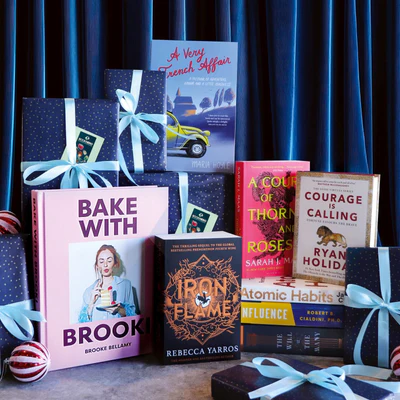
Our Gifting Service
Books make wonderful thoughtful gifts and we're here to help with gift-wrapping and cards. We can even send your gift directly to your loved one.
Cooking & Food lists from the team
Explore our curated lists from our heroes to find your next read!
-
![]()
![]()
![]() Lizzy's list
Lizzy's listCooking & Food
Cookbooks for Eating Plant Based
I (Lizzy) used to be vegan for a few years, and my husband still is. Now I eat vegetarian, he eats vegan,...View the list -
![]()
![]()
![]() Lizzy's list
Lizzy's listCooking & Food
Cookbooks for Kids!
I love that there are such an amazing range of cookbooks for tamariki to get involved with making food and learning the...View the list -
![]()
![]()
![]() Lizzy's list
Lizzy's listCooking & Food
Lizzy's Top 10 Favourite Cookbooks
As a bit of a cookbook collector here are some of my absolute favourites including the ones I gift to others, the...View the list -
![]()
![]()
![]() Lizzy's list
Lizzy's listCooking & Food
The Best Gluten Free Cookbooks
I got diagnosed as Coeliac last year which came as a big surprise! Finding amazing Gluten Free cookbooks has really helped me...View the list -
![Always Delicious]()
![]()
![]() Shirl's list
Shirl's listCooking & Food
Popular Upcoming Cookbook Releases for 2026
There are so many cookbooks being released in 2026 that we are excited for! We have a range of Aotearoa cookbook authors...View the list


