


1
of
1
Visualizing Feeling
Affect and the Feminine Avant-garde
 Book Hero Magic crafted this summary to help describe this book. While it's new and still
learning, it may not be perfect - your
feedback is welcome!
Summary
Book Hero Magic crafted this summary to help describe this book. While it's new and still
learning, it may not be perfect - your
feedback is welcome!
Summary
Read More
Format: Paperback / softback
$6099
Unit price
/
Unavailable
AVAILABLE WITH SUPPLIER
Ships from our Auckland warehouse within 4-6 weeks
Found a better price? Request a price match

Visualizing Feeling
$6099
Unit price
/
Unavailable
Book Hero Magic created this recommendation. While it's new and still learning, it may not be perfect - your feedback is welcome! IS THIS YOUR NEXT READ?
This book is ideal for students, scholars, and enthusiasts of contemporary art, women artists, and those interested in the intersection of emotion and aesthetics in art history.

Latest News
The First Ever NZ Children's Book Week!
We are so excited to celebrate kids reading books with the first NZ Children's Book...
What Lizzy's Family Loved on a Long Weekend Away
We recently went on a family long weekend away to Ohakune, a new spot for...
Why We Still Love Pokémon
Pokémon has changed enormously since I was trading cards at school and playing it on...
Paw Patrol : The Dino Movie Toys Have Arrived!
The new Paw Patrol: The Dino Movie toys have arrived & are ready to ship!
New Releases to add to your TBR (11th August)
There's a new release for everyone this week - here's your TBR roundup! Lizzy shares...
See moreIs late modern art 'anti-aesthetic'? What does it mean to label a piece of art 'affectless'? These traditional characterisations of 1960s and 1970s art are radically challenged in this subversive art history. By introducing feeling to the analysis of this period, Susan Best acknowledges the radical and exploratory nature of art in late modernism.
Is late modern art 'anti-aesthetic'? What does it mean to label a piece of art 'affectless'? These traditional characterisations of 1960s and 1970s art are radically challenged in this subversive art history. By introducing feeling to the analysis of this period, Susan Best acknowledges the radical and exploratory nature of art in late modernism.
Book Hero Magic formatted this description to make it easier to read. While it's new and
still learning, it may not be perfect - your
feedback is welcome!
Description
Is late modern art 'anti-aesthetic'? What does it mean to label a piece of art 'affectless'? These traditional characterisations of 1960s and 1970s art are radically challenged in this subversive art history.
By introducing feeling to the analysis of this period, Susan Best acknowledges the radical and exploratory nature of art in late modernism. Visualizing Feeling focuses on four highly influential female artists—Eva Hesse, Lygia Clark, Ana Mendieta and Theresa Hak Kyung Cha—and explores how their art transformed established avant-garde protocols by introducing an affective dimension. This aspect of their work, while often noted, has never before been analysed in detail.
Visualizing Feeling also addresses a methodological blind spot in art history: the interpretation of feeling, emotion and affect. It demonstrates that the affective dimension, alongside other materials and methods of art, is part of the artistic means of production and innovation. This is the first thorough re-appraisal of aesthetic engagement with affect in post-1960s art.
Book Hero Magic summarised reviews for this book. While it's new and still learning, it may not be perfect - your feedback is welcome! HOW HAS THIS BEEN REVIEWED?
Praised for lifting the 'ban on affect' in art criticism, this book is hailed by Thierry de Duve as a convincing demonstration that all art movements, including minimal and conceptual art, are aesthetic and emotional. Dr Ann Stephen commends it for recovering feeling and emotion in late modern art, especially highlighting the feminine and aesthetic aspects often overlooked.

Book Details
INFORMATION
ISBN: 9781780767093
Publisher: Bloomsbury Publishing PLC
Format: Paperback / softback
Date Published: 11 December 2013
Country: United Kingdom
Imprint: I.B. Tauris
Illustration: 27 bw integrated
Audience: General / adult
DIMENSIONS
Width: 156.0mm
Height: 234.0mm
Weight: 285g
Pages: 208
Collections
About the Author
Susan Best is Professor of Art Theory, Queensland College of Art, Griffith University. Her research focuses on modern and contemporary art, with a particular emphasis on women's art, conceptual art and South American art.
Also by Susan Best
View all-

It's Not Personal
How does something as potent and evocative as the body become a relatively neutral artistic material? From the 1960s, much body art and performance conformed to the anti-expressive ethos of minimalism and conceptualism, whilst still using the compelling human form. But how is this strange mismatch of vigour and impersonality able to transform the body into an expressive medium for...Paperback$11500Unit price /UnavailableAvailableShips in 2-3 weeks -

Reparative Aesthetics
By offering a new way of thinking about the role of politically engaged art, Susan Best opens up a new aesthetic field: reparative aesthetics. The book identifies an innovative aesthetic on the part of women photographers from the southern hemisphere, who, against the dominant modes of criticality in political art, look at how cultural production can be reparative. The winner...Paperback$6399Unit price /UnavailableAvailableShips in 4-6 weeks
More from Arts & Culture
View all-
 Dylan's Pick
Bold Types
A tribute to 32 truly independent bookshops throughout Aotearoa New Zealand, from north of Auckland down to Dunedin, and coast to coast. Jane Ussher's photographs show every bookstore in its unique nature - including behind the counter, smoko rooms, the mess which tells the hardworking story behind the joy of matching books with customers. Jemma Moreira's careful editing has crafted...Hardback$5999Elsewhere:$7000Unit price /UnavailableIn StockShips today -

 New Release
Disney Moana: The Official Cookbook
Embark on a culinary adventure with Moana of Motunui with Pacific recipes inspired by Moana and Moana 2! After a long day of sailing to see how far you’ll go or keeping the demigod Maui out of trouble with Te Fiti, catch a break with the delicious dishes in Moana: The Official Cookbook! Featuring more than 50 recipes spanning the...Hardback$4499Elsewhere:$5299Unit price /UnavailableIn StockShips today -

Did I Ever Tell You This?
In this unexpected memoir, written in a creative burst of just a few months in 2022, Sam Neill tells the story of how he became one of the world’s most celebrated actors, who has worked with everyone from Meryl Streep to Isabel Adjani, from Jeff Goldblum to Sean Connery, from Steven Spielberg to Jane Campion. By his own account, his...Paperback$3799Elsewhere:$4500Unit price /UnavailableIn StockShips today -

This Angry Pen of Mine
This Angry Pen of Mine by Layne Staley invites you to dive into the untold creative world of Layne Staley, the legendary voice behind Alice in Chains. This extraordinary collection showcases his handwritten lyrics, deeply personal poetry, stunning original artwork, rare photos, fan tributes, and so much more. Step into the world of Layne Staley like never before. For the...Hardback$7299Elsewhere:$8999Unit price /UnavailableIn StockShips today -

The Odyssey
Composed at the rosy-fingered dawn of world literature almost three millennia ago, The Odyssey is a poem about violence and the aftermath of war; about wealth, poverty and power; about marriage and family; about travellers, hospitality, and the yearning for home. This fresh, authoritative translation captures the beauty of this ancient poem as well as the drama of its narrative....Paperback$2999Elsewhere:$3599Unit price /UnavailableIn StockShips today -

They Bloom Because of You
Bestselling author and Instagram sensation Jessica Urlichs returns with a new collection of beautifully observed poems about the ever-evolving journey of motherhood - the hard, the magic and the fleeting. ‘A raw and honest read that makes you feel seen and understood in a way that will bring you to tears.’ - Hilary Swank ‘A book to keep close and...Paperback$3000Elsewhere:$3600Unit price /UnavailableIn StockShips today -
 14% off
Leaves of Grass
A collectible new Penguin Classics series offers beautiful, slim, clothbound editions of ten favourite poets. In 1855, Walt Whitman published his first collection of poetry, Leaves of Grass. The volume received great praise from leading Transcendentalist poet Ralph Waldo Emerson. This encouragement led to what would become a lifelong project, as Whitman expanded and rewrote the volume until his death...Hardback$1900Elsewhere:$2400Unit price /UnavailableIn StockShips today -

Great Writers and the Cats who Owned Them
Throughout history, cats and writers have bonded together in a magical combination of comfort, companionship and inspiration. The famous authors featured here range from Samuel Johnson, whose cat Hodge dined on oysters, and Edward Lear, whose charismatic cat Foss was missing half his tail, to Margaret Mitchell, L. M. Montgomery and Dorothy L. Sayers, who rescued her kitten Blitz from...Hardback$3999Unit price /UnavailableIn StockShips today -

Beautiful Chaos
The Instant Sunday Times Bestseller Selected poems from bestselling author and Instagram poet, Jessica Urlichs. 'These words awaken the magic of life by celebrating the ordinary.' - Giovanna Fletcher Motherhood is messy and beautiful, and hard and humbling. We adore our children and sometimes we miss ourselves. Beautiful Chaos is a collection of raw, honest poems about motherhood, capturing everything...Paperback$2900Elsewhere:$3500Unit price /UnavailableIn StockShips today -

The Iliad
When Emily Wilson's translation of The Odyssey appeared in 2017—revealing the ancient poem in a contemporary idiom that was "fresh, unpretentious and lean" (Madeline Miller, Washington Post)—critics lauded it as "a revelation" (Susan Chira, New York Times) and "a cultural landmark" (Charlotte Higgins, Guardian) that would forever change how Homer is read in English. Now Wilson has returned with an...Paperback$3299Elsewhere:$3799Unit price /UnavailableIn StockShips today -

Wreck This Journal: Now in Colour
The creative journey continues with Wreck This Journal: Now in Colour by Keri Smith, the latest and most vibrant edition of the groundbreaking series that redefined journaling. Celebrating its 10th anniversary, this edition brings the playful destructiveness of the original to life in dazzling full colour, adding a dynamic new dimension to the beloved prompts. Whether you're a seasoned Wreck-er,...Paperback$2500Elsewhere:$2800Unit price /UnavailableIn StockShips today -

A Thousand Feasts
THE INSTANT #1 SUNDAY TIMES BESTSELLER From award-winning writer Nigel Slater, comes a new and exquisitely written collection of notes, memoir, stories and small moments of joy. 'Nigel Slater’s prose is the rarest delicacy of all: exquisite yet effortless, filled with heart, tenderness, yearning and humour' ELIZABETH DAY For years, Nigel Slater has kept notebooks of curiosities and wonderings, penned...Paperback$2999Unit price /UnavailableIn StockShips today
Why buy from us?
Book Hero is not a chain store or big box retailer. We're an independent 100% NZ-owned business on a mission to help more Kiwis rediscover a love of books and reading!

Service & Delivery
Our warehouse in Auckland holds over 100,000 books, toys, board games and puzzles in-stock so you're not waiting for your order to arrive from overseas.

Auckland Bookstore
We're primarily an online store, but for your convenience you can pick up your order for free from our bookstore, which is right next door to our warehouse in Hobsonville.
Our Gifting Service
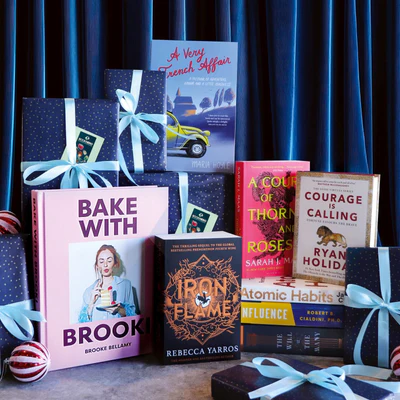
Books make wonderful thoughtful gifts and we're here to help with gift-wrapping and cards. We can even send your gift directly to your loved one.


