


Pre-order
1
of
1
A Wider Reality
Representative Lives, Modernity, and the Novel
Series: Thinking Literature
Brief Description
Theorises how treating lives as "representative" has been used, in and beyond the novel, to frame the problems and paradoxes of modernity. In the nineteenth century, claims that someone or something is "representative" began to saturate culture. Readers were asked to accept that the "representative" particular...
Read More
Format: Paperback / softback
$5699
Unit price
/
Unavailable
Pre-order
Releases
1st
March 2027
(Approx. Date)
Pre-order "A Wider Reality" now to secure your copy from our first shipment
Found a better price? Request a price match

A Wider Reality
$5699
Unit price
/
Unavailable
Latest News
Lizzy's First Impressions of The End of Everything
The Booker Prize was announced earlier this week and it was quite a divisive win...
New Hero Alert! Introducing Fran, our New Bookstore Hero
There's a new face in our Hobsonville bookshop, and we're delighted to introduce you to...
The Secret About Puzzle Piece Counts
I managed to completely blow Serena's mind this week with one little fact about jigsaw...
New Releases to add to your TBR (10th November)
Lizzy is here with her weekly wrap up of all the new books that have...
Find Their Perfect Match: Board Games for Every Personality
Not sure what board game to gift this Christmas? We've put together a gift guide...
See more Book Hero Magic formatted this description to make it easier to read. While it's new and
still learning, it may not be perfect - your
feedback is welcome!
Description
Theorises how treating lives as "representative" has been used, in and beyond the novel, to frame the problems and paradoxes of modernity.
In the nineteenth century, claims that someone or something is "representative" began to saturate culture. Readers were asked to accept that the "representative" particular is fitted to stand in for and reflect a larger unit to which it belongs, often a class or group, because it illustrates the relevant attributes, experiences, or behaviours of that larger unit. The particular could thus purportedly be used to characterise the larger unit—a unit that often didn't pre-exist the assertion of representativeness.
Heather Brink-Roby considers why this discourse of representativeness surged in nineteenth-century Britain: why it became insistent and examined in domains ranging from philosophical logic and astronomy to literary criticism and the novel. Fiction offered an especially inventive site for using the dynamics of representativeness to frame certain key nineteenth-century concerns, including isolation, freedom, and modern yearning, even as representativeness developed the novel's dual and contradictory status as both the genre of the individual and the genre of society.
Brink-Roby theorises the complex restructuring of thought involved in the nineteenth-century turn to representativeness and examines how the dynamics of representativeness itself—in addition to the content treated as representative—have shaped the way that modern existence is imagined. Offering fresh readings of novelists including Charles Dickens, George Eliot, Thomas Hardy, and Thomas Martin Wheeler, and drawing on a variety of other sources such as natural history monographs, logic textbooks, and medical articles, A Wider Reality shows how representativeness became the basis of a new economy of meaning, seeing, and knowing.
Series: Thinking Literature
View all-

Turning Away
A sweeping account of how we are at our most human when we turn away from the pains of the world. Why do we look away from the suffering of others? Why do we cover our faces in shame? Why do we lower our heads in grief? Few gestures are as universal as the averted gaze. Fewer still are as...Paperback$5699Unit price /UnavailableAvailableShips in 3-4 weeks -

Criticism and Truth
A defence and celebration of the discipline of literary studies and its most distinctive practice—close reading. Does literary criticism offer truths about the world? In this book, Jonathan Kramnick explains literary criticism’s distinctive approach to knowledge and its disciplinary rationale by zeroing in on its singular method: close reading. Close reading is the field’s way of pursuing arguments and advancing...Paperback$3799Unit price /UnavailableAvailableShips in 3-4 weeks -

Reading Hegel
Retrieves Hegelian speculative experience for literary theory. The relationship between Hegel and literary theory has for a long time been both contested and paradoxical. On the one hand, "theory" is often sceptical of all that Hegel ostensibly stood for: idealism, systematicity, and identity at the expense of difference. Yet, in spite of itself, literary theory is taken to owe a...Paperback$5699Unit price /UnavailableAvailableShips in 3-4 weeks -

Chinese Whispers
Chinese Whispers examines multiple contact zones between the Anglophone and Sinophone worlds, investigating how poetry both enables and complicates the transpacific production of meaning. In this new book, the noted critic and best-selling author Yunte Huang explores the dynamics of poetry and poetics in the age of globalization, particularly questions of translatability, universality, and risk in the transpacific context. Chinese...Hardback$18899Unit price /UnavailableAvailableShips in 3-4 weeks -

Joy of the Worm
Consulting an extensive archive of early modern literature, Joy of the Worm asserts that voluntary death in literature is not always a matter of tragedy. In this study, Drew Daniel identifies a surprisingly common aesthetic attitude that he calls “joy of the worm,” after Cleopatra’s embrace of the deadly asp in Shakespeare’s play—a pattern where voluntary death is imagined as...Paperback$10700Unit price /UnavailableAvailableShips in 2-3 weeks -
Chinese Whispers
Chinese Whispers examines multiple contact zones between the Anglophone and Sinophone worlds, investigating how poetry both enables and complicates the transpacific production of meaning. In this new book, the noted critic and best-selling author Yunte Huang explores the dynamics of poetry and poetics in the age of globalization, particularly questions of translatability, universality, and risk in the transpacific context. Chinese...Paperback$4799Unit price /UnavailableAvailableShips in 3-4 weeks -
The Barthes Fantastic
This study of the writing of Roland Barthes breaks down the divide between lived experience and the language of a literary work. In The Barthes Fantastic, John Lurz explores the intersection of literature and everyday life—and confronts some habits of literary study—through a reading of the work of Roland Barthes. An influential French theorist, Barthes wrote prolifically on the place...Paperback$5299Unit price /UnavailableAvailableShips in 3-4 weeks -

Throw Yourself Away
Proposes that we can best understand literature's relationship to sex through a renewed focus on masochism. In a series of readings that engage American and European works of fiction, drama, and theory from the late nineteenth through the early twenty-first centuries, critic and playwright Julia Jarcho argues that these works conceive writing itself as masochistic, and masochism as sexuality enacted...Paperback$4799Unit price /UnavailableAvailableShips in 3-4 weeks -
Pre-order
A Wider Reality
Theorises how treating lives as "representative" has been used, in and beyond the novel, to frame the problems and paradoxes of modernity. In the nineteenth century, claims that someone or something is "representative" began to saturate culture. Readers were asked to accept that the "representative" particular is fitted to stand in for and reflect a larger unit to which it...Paperback$5699Unit price /UnavailableOut 1 Mar 2027Pre-order -
Pre-order
Held by Form
How contemporary poetry illuminates the workings—and struggles—of commitment in feminism. In this lucid and vigorous defence of poetics for feminism, Anna Moser situates the practice of contemporary poetry in an exploratory dialogue with the work of philosophical, critical, and historical thinkers—placing Denise Riley in conversation with Judith Butler, Lyn Hejinian with Hannah Arendt, m. nourbeSe philip with Saidiya Hartman, and...Paperback$5499Unit price /UnavailableOut 9 Mar 2027Pre-order
Book Details
INFORMATION
ISBN: 9780226852096
Publisher: The University of Chicago Press
Format: Paperback / softback
Date Published: 05 January 2027
Country: United States
Imprint: University of Chicago Press
Illustration: 3 halftones
Audience: Tertiary education, Professional and scholarly
DIMENSIONS
Width: 152.0mm
Height: 229.0mm
Weight: 454g
Pages: 288
About the Author
Heather Brink-Roby is assistant professor of English at the National University of Singapore. Her work has appeared in ELH, Victorian Studies, and other publications.
Browse lists from our team
-
Lizzy's list
Arts & Culture
Poetry of Aotearoa
Check out some of the amazing local talent we are spoilt with right here in Aotearoa.
View the list -
Lizzy's list
Arts & Culture
Poetry for Beginners - Where to Start
10 Books I'd recommend to someone new to reading poetry - a mix of old and new, all magical introductions to the...
View the list -
Lizzy's list
Arts & Culture
Lizzy's Favourite Books of Poetry
If I could only have 10 poetry collections to survive on for the rest of my life, these are them. Or maybe...
View the list -
Lizzy's list
Arts & Culture
Books to read for Women in Translation month!
August is Women in Translation month, but at any time of year it's worth checking out these incredible novels written by women...
View the list -
Shirl's list
Arts & Culture
Inside the World of Film
Step behind the scenes of the world of filmmaking! Discover iconic directors and movie history of some of the world's memorable films.
View the list -
Shirl's list
Arts & Culture
Books to Celebrate NZ Music Month
New Zealand Music Month happens every May, it's a reminder that we have so many talented musicians, singer, songwriters here in Aotearoa....
View the list -
Amelia's list
Board Games
Board Games to Bring with You Travelling
View the list -
Lizzy's list
Sci-Fi & Fantasy
Fantasy to Pick Up if You Love Lord of the Rings
Looking for your next epic fantasy adventure with incredible writing, glorious characters, noble quests, and intricate world building? Here are some more...
View the list -
Lizzy's list
Health & Wellness
10 Books for Stress Busting
Looking for ways to reduce stress and take care of yourself better, despite all the intensity and busyness? These ten books (plus...
View the list -
Amelia's list
Board Games
Christmas Editions of Favourite Board Games
A few picks for those looking to add a festive twist to their game nights.
View the list -
Book Hero list
General Fiction
Popular Book Film & TV Tie-Ins
From page to screen, these are the books everyone is talking about! With some of the hottest film and TV adaptations hitting...
View the list -
Lizzy's list
Board Games
Board Games for Date Night
Need a cute board game to play with your significant other? I've rounded up some favourites that make the perfect addition to...
View the list
The Latest at Book Hero
View all


More from Arts & Culture
View all-
 Dylan's Pick
Bold Types
A tribute to 32 truly independent bookshops throughout Aotearoa New Zealand, from north of Auckland down to Dunedin, and coast to coast. Jane Ussher's photographs show every bookstore in its unique nature - including behind the counter, smoko rooms, the mess which tells the hardworking story behind the joy of matching books with customers. Jemma Moreira's careful editing has crafted...Hardback$6399Elsewhere:$7000Unit price /UnavailableIn StockShips tomorrow -
 22% offNew Release
I’ll Believe in Anything
From Jacob Tierney, the creator of Heated Rivalry, in partnership with Brendan Brady and Accent Aigu, comes I’ll Believe in Anything, an official and complete collection of annotated scripts for the biggest cultural sensation of the year, with all new exclusive behind-the-scenes content.Based on Rachel Reid’s blockbuster Game Changers book series, Heated Rivalry premiered on Crave and HBO in late 2025 and immediately took the world by storm. I’ll...Hardback$4300Elsewhere:$6000Unit price /UnavailableIn StockShips tomorrow -
 20% off
The Odyssey
Composed at the rosy-fingered dawn of world literature almost three millennia ago, The Odyssey is a poem about violence and the aftermath of war; about wealth, poverty and power; about marriage and family; about travellers, hospitality, and the yearning for home. This fresh, authoritative translation captures the beauty of this ancient poem as well as the drama of its narrative....Paperback$2400Elsewhere:$3599Unit price /UnavailableIn StockShips tomorrow -

Home Again
Join rock-legend, former Shihad frontman and lead singer of The Adults, Jon Toogood in this unflinching and no-holds-barred memoir Home Again.This is more than a rock story. Toogood looks back on a 37-year career that helped define New Zealand rock music, and the personal cost that came with it. From a music-obsessed childhood in Wellington to the deafening roar of international stages, this...Paperback$2800Elsewhere:$3999Unit price /UnavailableIn StockShips tomorrow -
 New Release
A Life in Lyrics
Freddie Mercury was one of the greatest showmen of the twentieth century. With his unparalleled voice and searing on-stage energy, he was a great pretender, a killer queen and a champion of the world. But behind the glamour lived a musician and lyricist talented beyond measure, and the creative force behind one of the most culturally significant and musically diverse...Hardback$5000Elsewhere:$6500Unit price /UnavailableIn StockShips tomorrow -
24% off
The Iliad
When Emily Wilson's translation of The Odyssey appeared in 2017—revealing the ancient poem in a contemporary idiom that was "fresh, unpretentious and lean" (Madeline Miller, Washington Post)—critics lauded it as "a revelation" (Susan Chira, New York Times) and "a cultural landmark" (Charlotte Higgins, Guardian) that would forever change how Homer is read in English. Now Wilson has returned with an...Paperback$2500Elsewhere:$3799Unit price /UnavailableIn StockShips tomorrow -

 22% off
Disney Moana: The Official Cookbook
Embark on a culinary adventure with Moana of Motunui with Pacific recipes inspired by Moana and Moana 2! After a long day of sailing to see how far you’ll go or keeping the demigod Maui out of trouble with Te Fiti, catch a break with the delicious dishes in Moana: The Official Cookbook! Featuring more than 50 recipes spanning the...Hardback$3500Elsewhere:$5299Unit price /UnavailableIn StockShips tomorrow -

The Artist's Way
The Artist's Way by Julia Cameron is a transformative guidebook that has captivated millions, including luminaries such as Elizabeth Gilbert and Tim Ferriss. With its profound ability to inspire and elevate, this book invites readers to embark on an enriching creative journey, fostering a deeper connection to one's artistic process and sense of purpose. The heart of Cameron's groundbreaking programme...Paperback$3700Elsewhere:$4500Unit price /UnavailableIn StockShips tomorrow -
 25% off
This Angry Pen of Mine
This Angry Pen of Mine by Layne Staley invites you to dive into the untold creative world of Layne Staley, the legendary voice behind Alice in Chains. This extraordinary collection showcases his handwritten lyrics, deeply personal poetry, stunning original artwork, rare photos, fan tributes, and so much more. Step into the world of Layne Staley like never before. For the...Hardback$5500Elsewhere:$8999Unit price /UnavailableIn StockShips tomorrow -

Twelfth Night
Part of the authoritative and acclaimed Penguin Shakespeare series, now rejacketed in the celebrated Penguin Classics livery. Separated from her twin brother Sebastian after a shipwreck, Viola disguises herself as a boy to serve the Duke of Illyria. Wooing a countess on his behalf, she is stunned to find herself the object of his beloved's affections. With the arrival of...Paperback$1900Elsewhere:$2100Unit price /UnavailableAvailableShips in 4-6 weeks -

Mah Jong Player's Companion
Since the arrival on the market of Patricia Thompson and Betty Maloney's two previous books, The Game of Mah Jong Illustrated and Improve Your Mah Jong, a wide range of hands from many parts of the world has been sent to them. In this player's companion, the authors have put together a cross-filled reference guide where over 120 hands, illustrated...Paperback$1999Elsewhere:$2299Unit price /UnavailableIn StockShips tomorrow -
 New Release
Beautiful Chaos
Featuring five exclusive new poems, this stunning foil-embossed hardback edition is a collector's item and a gorgeous gift. The Instant Sunday Times Bestseller. Selected poems on motherhood from bestselling author and Instagram poet, Jessica Urlichs. 'Reading Jess's poems makes me feel like she's somehow reached into my own personal reflections and articulated them in a way I never could.' –...Hardback$3299Elsewhere:$4000Unit price /UnavailableIn StockShips tomorrow


Why buy from us?
Book Hero is not a chain store or big box retailer. We're an independent 100% NZ-owned business on a mission to help more Kiwis rediscover a love of books and reading!

Service & Delivery
Our warehouse in Auckland holds over 200,000 books, toys, board games and puzzles in-stock so you're not waiting for your order to arrive from overseas.

Auckland Bookstore
We're primarily an online store, but for your convenience you can pick up your order for free from our bookstore, which is right next door to our warehouse in Hobsonville.
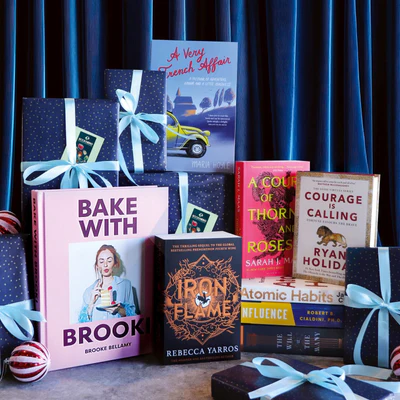
Our Gifting Service
Books make wonderful thoughtful gifts and we're here to help with gift-wrapping and cards. We can even send your gift directly to your loved one.