


1
of
1
Bioluminescence
Living Lights, Lights for Living

Ratings/reviews counts are updated frequently.
Check link for latest rating. ( 19 ratings, 2 reviews) Book Hero Magic crafted this summary to help describe this book. While it's new and still
learning, it may not be perfect - your
feedback is welcome!
Summary
Book Hero Magic crafted this summary to help describe this book. While it's new and still
learning, it may not be perfect - your
feedback is welcome!
Summary
Read More
Format: Hardback
$11899
Unit price
/
Unavailable
AVAILABLE WITH SUPPLIER
Ships from our Auckland warehouse within 3-4 weeks
Found a better price? Request a price match

Bioluminescence
$11899
Unit price
/
Unavailable
Book Hero Magic created this recommendation. While it's new and still learning, it may not be perfect - your feedback is welcome! IS THIS YOUR NEXT READ?
Ideal for readers interested in biology, natural history, and biochemistry, this book suits students, researchers, and science enthusiasts seeking an authoritative yet accessible introduction to bioluminescence and its practical applications.

Latest News
Marnie shares her tips for Spring!
Marnie is our garden expert and Lizzy kills every plant she brings home. We're getting...
A Little Bit Spooky: Board Games for Halloween
Halloween is the perfect excuse for a spooky board game night! From adorable ghost cats...
100 Years of Winnie the Pooh
100 years ago the Hundred Acre Wood and a cast of beloved friends was published...
The Book Briefing - 14/10/2026
It's time for another edition of 'The Book Briefing'! Sacha's back with all the latest...
TV Show Review on: Carrie
Liam's Review Carrie 26’Carrie has been on my radar for a while now, probably my...
See moreBioluminescence is everywhere on earth—most of all in the ocean, from angler fish in the depths to flashing dinoflagellates at the surface. Wilson and Hastings explore the natural history, evolution, and biochemistry of the diverse array of organisms that emit light and offer an evolutionary explanation for their sporadic distribution and rarity.
This book is a wonderful introduction to the world of bioluminescent organisms, from bacteria to fungi and animals, through to the technological discoveries and developments for which bioluminescence has been pivotal. Hastings and Wilson are certainly the individuals to bring the whole field together. -- Margaret McFall-Ngai, University of Wisconsin-Madison Wilson and Hastings have given us a masterful biology lesson showing how addressing a seemingly simple question-how do different organisms produce light?-leads to fascinating natural history, intriguing ecology, and exciting biochemistry. They show how the study of bioluminescence has given us new tools, new insights, and new questions that need to be answered. -- Martin Chalfie, winner of the 2008 Nobel Prize in Chemistry Wilson and Hastings demonstrate that what appears on the surface to be a biological oddity is actually a marvelous entry port into examining the intricacies of biochemistry as molded by evolution. I found this book absolutely captivating. -- Jim Morin, Professor of Ecology and Evolutionary Biology, Cornell University
Book Hero Magic formatted this description to make it easier to read. While it's new and
still learning, it may not be perfect - your
feedback is welcome!
Description
Bioluminescence is everywhere on earth—most of all in the ocean, from angler fish in the depths to the flashing of dinoflagellates at the surface. Here, Thérèse Wilson and Woody Hastings explore the natural history, evolution, and biochemistry of the diverse array of organisms that emit light.
While some bacteria, mushrooms, and invertebrates, as well as fish, are bioluminescent, other vertebrates and plants are not. The sporadic distribution and paucity of luminous forms calls for explanation, as does the fact that unrelated groups evolved completely different biochemical pathways to luminescence. The authors explore the hypothesis that many different luciferase systems arose in the early evolution of life because of their ability to remove oxygen, which was toxic to life when it first appeared on earth. As oxygen became abundant and bioluminescence was no longer adequate for oxygen removal, other antioxidant mechanisms evolved and most luminous species became extinct. Those light-emitting species that avoided extinction evolved uses with survival value for the light itself. Today's luminous organisms use bioluminescence for defense from predators, for their own predatory purposes, or for communication in sexual courtship.
Bioluminescence was earlier viewed as a fascinating feature of the living world, but one whose study seemed unlikely to contribute in any practical way. Today, bioluminescence is no longer an esoteric area of research. Applications are numerous, ranging from the rapid detection of microbial contamination in beef and water, to finding the location of cancer cells, to working out circuitry in the brain.
Book Hero Magic summarised reviews for this book. While it's new and still learning, it may not be perfect - your feedback is welcome! HOW HAS THIS BEEN REVIEWED?
Critics praise Bioluminescence as an exceptional and scholarly work that provides a clear and masterful exploration of how diverse organisms produce light. Martin Chalfie, Nobel laureate, commends the book for revealing fascinating natural history, ecology, and biochemistry, while Jim Morin calls it a captivating look into evolutionary biochemistry. The coverage from fundamental biology to technological advances has been widely appreciated for bringing together the entire field.

Book Details
INFORMATION
ISBN: 9780674067165
Publisher: Harvard University Press
Format: Hardback
Date Published: 04 March 2013
Country: United States
Imprint: Harvard University Press
Illustration: 74 color illustrations, 3 halftones, 11 line illustrations, 6 graphs
Audience: Professional and scholarly
DIMENSIONS
Spine width: 20.0mm
Width: 156.0mm
Height: 235.0mm
Weight: 748g
Pages: 208
About the Author
Thérèse Wilson (1925–2014) was Senior Research Associate Emerita in the Department of Molecular and Cellular Biology at Harvard University. J. Woodland Hastings (1927–2014) was Paul C. Mangelsdorf Research Professor of Natural Sciences in the Department of Molecular and Cellular Biology at Harvard University.
More from Education & Reference
View all-

Revenge of the Tipping Point
Twenty-five years after the publication of his groundbreaking first book, Malcolm Gladwell returns with a brand new volume that reframes the lessons of The Tipping Point in a startling and revealing light. What does the heartbreaking fate of the cheetah tell us about the way we raise our children? Why do elite universities care so much about sports? What is...Paperback$2999Elsewhere:$3999Unit price /UnavailableAvailableShips in 4-6 weeks -

The Body Keeps the Score
The Body Keeps the Score by Dr Bessel van der Kolk is a compelling and compassionate exploration of the deep-seated impact of trauma on the human body and mind. This groundbreaking work delves into the complex causes of trauma and paints a vivid picture of the revolutionary treatments that are enabling countless individuals to reclaim their lives filled with purpose...Paperback$2400Elsewhere:$3000Unit price /UnavailableIn StockShips today -
 New Release
Song of the Birds
A stunning and panoramic history of native birds in Aotearoa, from the bestselling author of The Meaning of Trees For millions of years, the song of the birds echoed throughout Aotearoa, with no one around to hear it. While the arrival of humans would transform their story forever - birds may have changed us even more. In this beautiful and...Hardback$4499Elsewhere:$5500Unit price /UnavailableIn StockShips today -
 New Release
Lucky You're Tough
Lucky You're Tough chronicles the early life of helicopter pilot and NZSAS soldier Mark Law, from growing up in the rural wilds of Whangamōmona through to surviving a series of life-threatening events that would shape his life and career. After a career as a badged soldier in the NZSAS that led to an intriguing stint with the British SAS and...Paperback$3199Elsewhere:$3999Unit price /UnavailableIn StockShips today -

The Age Code
What if the food you eat could rewind your biological clock? 'Clear and compelling' — Chris van Tulleken 'Really interesting and insightful' — Joe Wicks 'Fascinating' — Tim Spector From the rising incidence of cancer in the under-50s to increased infertility rates, there are signs everywhere that growing numbers of us are ageing too quickly. Why? Many believe there’s one...Paperback$2999Elsewhere:$3799Unit price /UnavailableIn StockShips today -
One Last Question, Prime Minister
From Muldoon to Luxon, untold stories from the House of Parliament Barry Soper has spent close to five decades questioning New Zealand's prime ministers.From the imposing, larger-than-life characters of Rob Muldoon and David Lange, to the golden age of Helen Clark and John Key, and the post-Covid era of Jacinda Ardern and the 'Chrises', Soper's insight and nose for a...Paperback$3199Elsewhere:$3999Unit price /UnavailableIn StockShips today -

Fungi of Aotearoa
The complete introduction to finding, identifying and using mushrooms and other fungi in New Zealand. Enter and explore the fascinating world of fungi. In this practical and up-to-date guide, forager and fungus enthusiast Liv Sisson shares her top tips and takes the reader on a journey to discover the unique and diverse fungi Aotearoa has to offer. Discover how to...Paperback$3200Elsewhere:$4500Unit price /UnavailableIn StockShips today -
Suicidal Empathy
The bestselling author of The Parasitic Mind shows why empathy in politics leads to civilizational collapse. What happens when a society elevates victimhood to a virtue and decides that punishment is cruel? You get the disease Dr. Gad Saad calls suicidal empathy. And the West may be terminally infected. In his new book, Suicidal Empathy, Saad unleashes a blistering critique...Paperback$3099Elsewhere:$3799Unit price /UnavailableIn StockShips today -

Maori Made Easy Workbook 1/Kete 1
Maori Made Easy Workbook 1/Kete 1 by Scotty Morrison is the ultimate companion for anyone eager to learn the beautiful and complex Maori language. Whether you're starting from scratch or looking to brush up on your skills, this workbook offers a structured and engaging way to immerse yourself in te reo Maori. Designed to be accessible regardless of your starting...Paperback$2000Elsewhere:$2500Unit price /UnavailableIn StockShips today -

Kitchen Confidential
The classic bestseller from the star of Parts Unknown and No Reservations: 25th Anniversary edition, with a new introduction by Irvine Welsh. BEFORE THERE WAS THE BEAR, THERE WAS BOURDAIN. ‘Elizabeth David written by Quentin Tarantino’ — A.A. Gill ‘Fantastic: as lip-smackingly seductive as a bowl of fat chips and pungent aioli’ — Daily Telegraph After twenty-five years of sex,...Paperback$2500Elsewhere:$2799Unit price /UnavailableIn StockShips today -
New Release
Hormone Health is Mental Health
Hormone Health is Mental Health is a lifechanging guide to understanding perimenopause and midlife women's mental health - and how understanding your hormones is the first step to feeling like yourself again. This book is for women in their thirties, forties, and fifties who feel like they're falling apart. Women who feel like their brains and bodies are betraying them,...Paperback$3299Elsewhere:$4000Unit price /UnavailableIn StockShips today -

"What Were You Thinking!?"
Everything parents need to know about their baby, child or teen's developing brain to raise resilient, emotional intelligent kids, by globally renowned neuroscience educator Nathan Wallis. 'What were you thinking!?'If you've ever asked this in despair while watching a toddler melt down, a tween push boundaries or a teenager make a truly terrible decision, this book is for you.In "What Were...Paperback$3299Elsewhere:$3999Unit price /UnavailableIn StockShips today
Why buy from us?
Book Hero is not a chain store or big box retailer. We're an independent 100% NZ-owned business on a mission to help more Kiwis rediscover a love of books and reading!

Service & Delivery
Our warehouse in Auckland holds over 100,000 books, toys, board games and puzzles in-stock so you're not waiting for your order to arrive from overseas.

Auckland Bookstore
We're primarily an online store, but for your convenience you can pick up your order for free from our bookstore, which is right next door to our warehouse in Hobsonville.
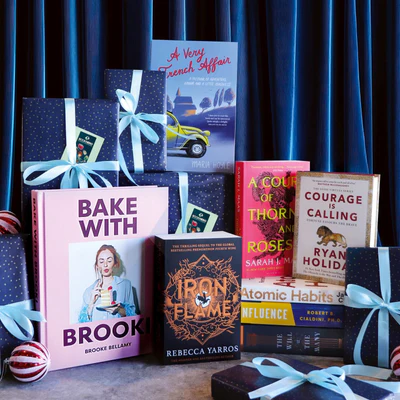
Our Gifting Service
Books make wonderful thoughtful gifts and we're here to help with gift-wrapping and cards. We can even send your gift directly to your loved one.


