








1
of
1
Death 24x a Second

Ratings/reviews counts are updated frequently.
Check link for latest rating. ( 151 ratings, 5 reviews) Book Hero Magic crafted this summary to help describe this book. While it's new and still
learning, it may not be perfect - your
feedback is welcome!
Summary
Book Hero Magic crafted this summary to help describe this book. While it's new and still
learning, it may not be perfect - your
feedback is welcome!
Summary
Read More
Format: Paperback / softback
TEMPORARILY OUT OF STOCK
Please add to wishlist to be notified when back in stock
Sorry, we're currently out of stock of Death 24x a Second. Please add to your Wishlist and we'll send you an email as soon as it's back in stock.
Book Hero Magic created this recommendation. While it's new and still learning, it may not be perfect - your feedback is welcome! IS THIS YOUR NEXT READ?
Ideal for readers interested in film theory, media studies, and cultural criticism, particularly those curious about the impact of digital technology on cinematic experience and narrative structure.

Latest News
Tiny Books, Big Adventures: Meet Bookcessories!
We are so excited to introduce to you our mini Bookcessories range! These are super cute...
New Releases to add to your TBR this week (9th September)
Lizzy is rounding up the newest arrivals across fiction, non-fiction, and children's books! Check out...
The Book Briefing - September 9th
Welcome to this week's Book Briefing where we round up the news for the week!
Your Introduction to Paranormal Romance
Paranormal Romance is a sub-genre of the romance world that I love in all it's...
Lizzy and Roopa loved Practical Magic 2
Lizzy and Roopa went along to the Practical Magic 2 screening and had a wonderfully...
See moreThe manipulation of the cinematic image by the viewer also makes visiblecinema's material and aesthetic attributes. By exploring how new technologiescan give new life to 'old' cinema, Death 24x A Second offers an originalre-evaluation of film's history and also its historical usefulness.
Book Hero Magic formatted this description to make it easier to read. While it's new and
still learning, it may not be perfect - your
feedback is welcome!
Description
In Death 24x a Second, Laura Mulvey addresses some of the key questions of film theory, semiotics, spectatorship, and narrative. New media technologies, such as DVD, have transformed modes of film consumption and thus affected viewers' relationship to the image and to narrative structure. DVDs give viewers control of both image and story, so that films produced to be seen collectively and followed as their linear narratives demand may be found to contain unexpected (even unintended) and multiple structures of pleasure.
The tension between the still frame and the moving image coincides with the cinema's capacity to capture the appearance of life and preserve it after death. Mulvey proposes that with the arrival of new technologies and new ways of experiencing the cinematic image, film’s hidden stillness comes to the fore, thereby acquiring a new accessibility and visibility. The individual frame, the projected film’s best-kept secret, can now be revealed, by anyone, at the simple touch of a button. Easy access to repetition, slow motion, and the freeze-frame may well shift the spectator’s pleasure to a fetishistic rather than a voyeuristic investment in the cinematic object.
Yet, there is another, narrative aspect to the stillness/movement tension that is not specific to the cinema but has been reworked and reinvented within the constraints of mass entertainment storytelling. Mulvey detects, at the present moment, an attraction to endings, and with the threat of 'ending' hanging over the cinema itself, there is an extra awareness of the deathlike properties of narrative closure. Inevitably, such a conjunction shifts the attention of the psychoanalytically influenced critic away from a preoccupation with the erotic, as the propelling force of narrative, towards death. Freud’s concept of the death drive as applied to narrative structure allows a theoretical reassessment of cinematic storytelling which ultimately converges with cinema’s inherent stillness, its own death-like properties.
Book Hero Magic summarised reviews for this book. While it's new and still learning, it may not be perfect - your feedback is welcome! HOW HAS THIS BEEN REVIEWED?
Critics praise the book's elegiac tone and insightful analysis. The Times Higher Education Supplement calls it "a wonderful close analysis" that balances melancholy with optimism about filmic slowness. The Independent on Sunday notes Mulvey's ability to provoke fresh perspectives on cinema, while Film Comment describes it as a thoughtful response to technological advances and film’s evolving history.

Book Details
INFORMATION
ISBN: 9781861892638
Publisher: Reaktion Books
Format: Paperback / softback
Date Published: 01 November 2005
Country: United Kingdom
Imprint: Reaktion Books
Illustration: 37 illustrations
Audience: General / adult, Tertiary education, Professional and scholarly
DIMENSIONS
Width: 216.0mm
Height: 138.0mm
Weight: 250g
Pages: 216
Collections
About the Author
Laura Mulvey is Professor of Film and Media Studies at Birkbeck College, University of London and the author of Visual and Other Pleasures (1989), Fetishism and Curiosity (1996) and Death 24x a Second (Reaktion, 2005).
Also by Laura Mulvey
View all-

Citizen Kane
Citizen Kane's reputation as one of the greatest films of all time is matched only by the accumulation of critical commentary that surrounds it. What more can there be to say about a masterpiece so universally acknowledged? Laura Mulvey, in a fresh and original reading, illuminates the richness of the film, both thematically and stylistically, relating it to Welles's political...Paperback$2999Unit price /UnavailableAvailableShips in 4-6 weeks -

Afterimages
This book marks a return for Laura Mulvey to questions of film theory and feminism, as well as a reconsideration of new and old film technologies. Its title, Afterimages, alludes to the dislocation of time that runs through many of the films and works in this book, and the way we view them. Structured in three main parts, the book...HardbackSold Out
More from Arts & Culture
View all-
 Dylan's Pick
Bold Types
A tribute to 32 truly independent bookshops throughout Aotearoa New Zealand, from north of Auckland down to Dunedin, and coast to coast. Jane Ussher's photographs show every bookstore in its unique nature - including behind the counter, smoko rooms, the mess which tells the hardworking story behind the joy of matching books with customers. Jemma Moreira's careful editing has crafted...Hardback$5999Elsewhere:$7000Unit price /UnavailableIn StockShips tomorrow -
 New Release
Home Again
Join rock-legend, former Shihad frontman and lead singer of The Adults, Jon Toogood in this unflinching and no-holds-barred memoir Home Again.This is more than a rock story. Toogood looks back on a 37-year career that helped define New Zealand rock music, and the personal cost that came with it. From a music-obsessed childhood in Wellington to the deafening roar of international stages, this...Paperback$3199Elsewhere:$3999Unit price /UnavailableIn StockShips tomorrow -

 New Release
Disney Moana: The Official Cookbook
Embark on a culinary adventure with Moana of Motunui with Pacific recipes inspired by Moana and Moana 2! After a long day of sailing to see how far you’ll go or keeping the demigod Maui out of trouble with Te Fiti, catch a break with the delicious dishes in Moana: The Official Cookbook! Featuring more than 50 recipes spanning the...Hardback$4499Elsewhere:$5299Unit price /UnavailableIn StockShips tomorrow -

This Angry Pen of Mine
This Angry Pen of Mine by Layne Staley invites you to dive into the untold creative world of Layne Staley, the legendary voice behind Alice in Chains. This extraordinary collection showcases his handwritten lyrics, deeply personal poetry, stunning original artwork, rare photos, fan tributes, and so much more. Step into the world of Layne Staley like never before. For the...Hardback$7299Elsewhere:$8999Unit price /UnavailableIn StockShips tomorrow -
Did I Ever Tell You This?
In this unexpected memoir, written in a creative burst of just a few months in 2022, Sam Neill tells the story of how he became one of the world’s most celebrated actors, who has worked with everyone from Meryl Streep to Isabel Adjani, from Jeff Goldblum to Sean Connery, from Steven Spielberg to Jane Campion. By his own account, his...Paperback$3799Elsewhere:$4500Unit price /UnavailableIn StockShips tomorrow -

They Bloom Because of You
Bestselling author and Instagram sensation Jessica Urlichs returns with a new collection of beautifully observed poems about the ever-evolving journey of motherhood - the hard, the magic and the fleeting. ‘A raw and honest read that makes you feel seen and understood in a way that will bring you to tears.’ - Hilary Swank ‘A book to keep close and...Paperback$3000Elsewhere:$3600Unit price /UnavailableIn StockShips tomorrow -

The Odyssey
The Odyssey by Homer is a monumental epic that has enthralled readers for centuries with its rich tapestry of adventure and human struggle. It chronicles the perilous journey of Odysseus, the cunning King of Ithaca, as he strives to return home after the fall of Troy. During this ten-year odyssey, Odysseus confronts myriad dangers, both natural and supernatural, that test...Paperback$2499Elsewhere:$2800Unit price /UnavailableIn StockShips tomorrow -

Leaves of Grass
A collectible new Penguin Classics series offers beautiful, slim, clothbound editions of ten favourite poets. In 1855, Walt Whitman published his first collection of poetry, Leaves of Grass. The volume received great praise from leading Transcendentalist poet Ralph Waldo Emerson. This encouragement led to what would become a lifelong project, as Whitman expanded and rewrote the volume until his death...Hardback$2200Elsewhere:$2400Unit price /UnavailableIn StockShips tomorrow -

Great Writers and the Cats who Owned Them
Throughout history, cats and writers have bonded together in a magical combination of comfort, companionship and inspiration. The famous authors featured here range from Samuel Johnson, whose cat Hodge dined on oysters, and Edward Lear, whose charismatic cat Foss was missing half his tail, to Margaret Mitchell, L. M. Montgomery and Dorothy L. Sayers, who rescued her kitten Blitz from...Hardback$3999Unit price /UnavailableIn StockShips tomorrow -

Vagabond
The outrageous, riotous memoir from the cult actor and star of The Rocky Horror Picture Show, Clue, and IT. Actor, rock 'n' roll singer, the prince of Halloween, confusing sex symbol. Many labels have been given to the inimitable Tim Curry over the years. All are true, and yet none are quite right. Here, for the first time, Curry reveals...Hardback$4499Elsewhere:$6000Unit price /UnavailableIn StockShips tomorrow -

The Odyssey
Composed at the rosy-fingered dawn of world literature almost three millennia ago, The Odyssey is a poem about violence and the aftermath of war; about wealth, poverty and power; about marriage and family; about travellers, hospitality, and the yearning for home. This fresh, authoritative translation captures the beauty of this ancient poem as well as the drama of its narrative....Paperback$2999Elsewhere:$3599Unit price /UnavailableBackorderShips early October -

Beautiful Chaos
The Instant Sunday Times Bestseller Selected poems from bestselling author and Instagram poet, Jessica Urlichs. 'These words awaken the magic of life by celebrating the ordinary.' - Giovanna Fletcher Motherhood is messy and beautiful, and hard and humbling. We adore our children and sometimes we miss ourselves. Beautiful Chaos is a collection of raw, honest poems about motherhood, capturing everything...Paperback$2900Elsewhere:$3500Unit price /UnavailableIn StockShips tomorrow
Why buy from us?
Book Hero is not a chain store or big box retailer. We're an independent 100% NZ-owned business on a mission to help more Kiwis rediscover a love of books and reading!

Service & Delivery
Our warehouse in Auckland holds over 100,000 books, toys, board games and puzzles in-stock so you're not waiting for your order to arrive from overseas.

Auckland Bookstore
We're primarily an online store, but for your convenience you can pick up your order for free from our bookstore, which is right next door to our warehouse in Hobsonville.
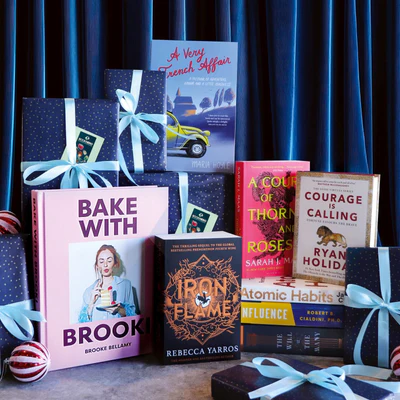
Our Gifting Service
Books make wonderful thoughtful gifts and we're here to help with gift-wrapping and cards. We can even send your gift directly to your loved one.
Arts & Culture lists from the team
Explore our curated lists from our heroes to find your next read!
-
![]()
![]()
![]() Lizzy's list
Lizzy's listArts & Culture
Poetry of Aotearoa
Check out some of the amazing local talent we are spoilt with right here in Aotearoa.View the list -
![]()
![]()
![]() Lizzy's list
Lizzy's listArts & Culture
Poetry for Beginners - Where to Start
10 Books I'd recommend to someone new to reading poetry - a mix of old and new, all magical introductions to the...View the list -
![]()
![]()
![]() Lizzy's list
Lizzy's listArts & Culture
Lizzy's Favourite Books of Poetry
If I could only have 10 poetry collections to survive on for the rest of my life, these are them. Or maybe...View the list -
![]()
![]()
![]() Lizzy's list
Lizzy's listArts & Culture
Books to read for Women in Translation month!
August is Women in Translation month, but at any time of year it's worth checking out these incredible novels written by women...View the list -
![]()
![]()
![]() Shirl's list
Shirl's listArts & Culture
Inside the World of Film
Step behind the scenes of the world of filmmaking! Discover iconic directors and movie history of some of the world's memorable films.View the list -
![]()
![]()
![]() Shirl's list
Shirl's listArts & Culture
Books to Celebrate NZ Music Month
New Zealand Music Month happens every May, it's a reminder that we have so many talented musicians, singer, songwriters here in Aotearoa....View the list


