


1
of
1
Blood and Treasure
The Economics of Conflict from the Vikings to Ukraine
Brief Description
Blood and Treasure is the story of the economics of conflict from the Viking Age to the war in Ukraine. Wars are expensive, both in human terms and monetary ones. Since at least the 1640s, in the aftermath of the British Civil Wars, the phrase 'blood...
Read More
Format: Paperback / softback
$3999
Unit price
/
Unavailable
AVAILABLE WITH SUPPLIER
Ships from our Auckland warehouse within 4-6 weeks
Found a better price? Request a price match

Blood and Treasure
$3999
Unit price
/
Unavailable
Latest News
100 Years of Winnie the Pooh
100 years ago the Hundred Acre Wood and a cast of beloved friends was published...
The Book Briefing - 14/10/2026
It's time for another edition of 'The Book Briefing'! Sacha's back with all the latest...
TV Show Review on: Carrie
Liam's Review Carrie 26’Carrie has been on my radar for a while now, probably my...
The Struggle of Working Somewhere That Sells Beautiful Books
The problem is…I work in the cutest little (I said what I said) bookshop and...
New Releases to add to your TBR this week (12th October)
There's new dark romance from one of our favourites, the brand new US edition of...
See moreHow war and violence have shaped institutions, told by the author of Two Hundred Years of Muddling Through
 Book Hero Magic formatted this description to make it easier to read. While it's new and
still learning, it may not be perfect - your
feedback is welcome!
Description
Book Hero Magic formatted this description to make it easier to read. While it's new and
still learning, it may not be perfect - your
feedback is welcome!
Description
Blood and Treasure is the story of the economics of conflict from the Viking Age to the war in Ukraine.
Wars are expensive, both in human terms and monetary ones. Since at least the 1640s, in the aftermath of the British Civil Wars, the phrase 'blood and treasure' has sought to encapsulate these costs.
Two economic notions, in particular, feature in this book: incentives and institutions. A rational look at incentives explains even the most seemingly irrational behaviour – and few things are as irrational as war. Crucially, incentives are not formed in a vacuum; they are shaped by the wider social, cultural, and political context – the kind of things economists call institutions (i.e. the State). Over time, institutions change and with them, incentives change too. Together, institutions and incentives shape and explain human behaviour. Over the long span of human history, nothing has shaped institutions – and hence economic outcomes – as much as war and violence.
Blood and Treasure examines why Genghis Khan should be regarded as the father of globalisation, how New World gold and silver kept Spain poor, why some economists think of witch trials as a form of 'non-price competition', how pirate captains were pioneers of effective HR techniques, how handing out medals hurt the Luftwaffe in the Second World War, and why economic theories helped to create a tragedy in Vietnam.
Along the way, it considers why some medieval kings were right to arm their soldiers with inferior weapons, takes some management lessons from Joseph Stalin, and asks if a culture of patronage and cronyism helped the Royal Navy rise to greatness. It also analyses the changing economic costs of war and asks whether war is always bad for the economy.
Book Details
INFORMATION
ISBN: 9780349145402
Publisher: Little, Brown Book Group
Format: Paperback / softback
Date Published: 05 June 2025
Country: United Kingdom
Imprint: Abacus
Audience: Tertiary education, Professional and scholarly
DIMENSIONS
Spine width: 22.0mm
Width: 153.0mm
Height: 234.0mm
Weight: 390g
Pages: 320
About the Author
Duncan Weldon is a writer and broadcaster. As a journalist he has previously covered the British and global economies at The Economist and the BBC as well as writing and presenting radio documentaries. An economist by background, he began his career at the Bank of England, before working in asset management and public policy. He is a member of the advisory board of the Centre for the Analysis of Comparative Advantage in the Global Economy at Warwick University. He is also a regular commentator on television and radio and writes for a variety of publications. His first book, Two Hundred Years of Muddling Through, was published in 2021.
Also by Duncan Weldon
View all-

Blood and Treasure
Blood and Treasure is the story of the economics of conflict from the Viking Age to the war in Ukraine. 'Absolutely fascinating and totally absorbing' JAMES HOLLAND 'A brilliant book' MARTIN WOLF, FINANCIAL TIMES CHIEF ECONOMICS EDITOR 'Chock full of marvellous nuggets, this fascinating book is both important and surprisingly cheering' ED CONWAY 'A delightfully quirky approach to military history'...PaperbackSold Out
More from Philosophy & Psychology
View all-

Atomic Habits
Atomic Habits by James Clear is a transformative guide that demonstrates how tiny, incremental changes in behaviour can fundamentally reshape your life. Rather than urging sweeping transformations, Clear advocates for the compound effect of hundreds of small decisions. Whether it’s performing two push-ups a day, waking up five minutes earlier, or making a brief, focused phone call, these minuscule adjustments,...Paperback$3199Elsewhere:$4000Unit price /UnavailableIn StockShips today -
The Winner's Formula
The Neuroscience of Peak Performance, Success, and Happiness Why do some people win all the time? Why do others languish? From Olympians to Formula 1 drivers, addicts to billionaires, cognitive neuroscientist Dr Kerry Spackman has spent decades working to help people understand how to succeed. In The Winner's Formula, Kerry explains what goes on in your brain when you are...Paperback$3199Elsewhere:$3999Unit price /UnavailableIn StockShips today -
Strangers
The must-read memoir of the end of a marriage and the start of a personal revolution, based on the iconic Modern Love essay in the New York Times and perfect for fans of Glennon Doyle. "A beautifully written eulogy for the loss of a relationship" — Joyce Carol Oates How do we go on when a loved one betrays us?...Paperback$3299Elsewhere:$4000Unit price /UnavailableIn StockShips today -

Aroha
Aroha by Dr Hinemoa Elder is an enlightening exploration of timeless Maori wisdom, intricately woven into a contemporary context. This top-selling non-fiction title from New Zealand in 2021 introduces readers to 52 traditional Maori proverbs, known as whakataukī, each offering a profound lesson for every week of the year. Dr Elder, a respected Maori psychiatrist, delves into these powerful sayings...Hardback$2400Elsewhere:$3000Unit price /UnavailableIn StockShips today -

Eat Your Ice Cream
The New York Times bestseller that presents a bold new vision for living well and ageing with purpose from a world-renowned health expert THE INSTANT NEW YORK TIMES BESTSELLER From a leading doctor and world-renowned health expert, the simple, uplifting and practical guide to cutting through the wellness noise, living well and ageing with purpose. ‘Essential reading for anyone who...Paperback$3199Elsewhere:$4000Unit price /UnavailableIn StockShips today -
 New Release
Mauritau
A journal to find balance with the 12 states of Mauri. Mauri is the pulse of wellbeing - the spark that makes you uniquely you. In Mauritau, clinical psychologist Jessica Gerbic introduces the 12 states of Mauri and shows how intentional awareness can guide your sense of balance across mind, body, spirit, environment and whānau. From Mauri Oho, a sudden...Hardback$3099Elsewhere:$3799Unit price /UnavailableIn StockShips today -

The Creative Act
Many famed music producers are known for a particular sound that has its day and then ages out. Rick Rubin is known for something else: creating a space where artists of all different genres and traditions can home in on who they really are and what they really offer. He has made a practice of helping people transcend their self-imposed...Hardback$4400Elsewhere:$5500Unit price /UnavailableBackorderShips mid October -
New Release
Better Never Stops
The Art and Science of Continuous Improvement From delinquent to doctor, Paul Wood knows first-hand how far we can take our lives if we address what holds us back. At the age of 18, Wood was sent to New Zealand's toughest prison. Almost 11 years later, in 2006, he walked out a free man, escaping his past and becoming a...Paperback$3199Elsewhere:$3999Unit price /UnavailableIn StockShips today -

The Body Keeps the Score
The Body Keeps the Score by Dr Bessel van der Kolk is a compelling and compassionate exploration of the deep-seated impact of trauma on the human body and mind. This groundbreaking work delves into the complex causes of trauma and paints a vivid picture of the revolutionary treatments that are enabling countless individuals to reclaim their lives filled with purpose...Paperback$2400Elsewhere:$3000Unit price /UnavailableIn StockShips today -

Inside the Box
How to do more with less and use limits to stimulate creativity, innovation and collaboration, from the Sunday Times bestselling author of Range. We live in a world that gives us seemingly infinite choices and values freedom above all else. We have an unprecedented number of options regarding what to do, who to be and how to spend our time....Paperback$3000Elsewhere:$3900Unit price /UnavailableIn StockShips today -
Lessons on Living
Bestselling author Nigel Latta's simple psychological toolkit for life's ups and downs. Over thirty years working as a clinical psychologist, Nigel Latta assembled a personal toolkit based on three simple principles. These principles helped him to be more resilient, joyful, and attuned to what matters most. The same principles have helped him through some difficult times as well, such as...Paperback$3299Elsewhere:$3999Unit price /UnavailableIn StockShips today -
Tell Me Where It Hurts
Leading expert Rachel Zoffness bridges the gap between medicine and psychology to get to the heart of treating pain We can move the dial on pain Every one of us will experience pain, be it back pain, the pain of childbirth, or living in an ageing body. Not a single one of us will escape. But what if everything you...Hardback$6500Unit price /UnavailableIn StockShips today
Why buy from us?
Book Hero is not a chain store or big box retailer. We're an independent 100% NZ-owned business on a mission to help more Kiwis rediscover a love of books and reading!

Service & Delivery
Our warehouse in Auckland holds over 100,000 books, toys, board games and puzzles in-stock so you're not waiting for your order to arrive from overseas.

Auckland Bookstore
We're primarily an online store, but for your convenience you can pick up your order for free from our bookstore, which is right next door to our warehouse in Hobsonville.
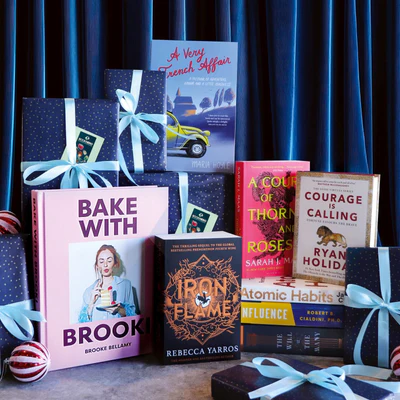
Our Gifting Service
Books make wonderful thoughtful gifts and we're here to help with gift-wrapping and cards. We can even send your gift directly to your loved one.


