








1
of
1
Coming to Our Senses
A Boy Who Learned to See, a Girl Who Learned to Hear, and How We All Discover the World

Ratings/reviews counts are updated frequently.
Check link for latest rating. ( 107 ratings, 21 reviews) Book Hero Magic crafted this summary to help describe this book. While it's new and still
learning, it may not be perfect - your
feedback is welcome!
Summary
Book Hero Magic crafted this summary to help describe this book. While it's new and still
learning, it may not be perfect - your
feedback is welcome!
Summary
Read More
Format: Hardback
TEMPORARILY OUT OF STOCK
Please add to wishlist to be notified when back in stock
Sorry, we're currently out of stock of Coming to Our Senses. Please add to your Wishlist and we'll send you an email as soon as it's back in stock.
Book Hero Magic created this recommendation. While it's new and still learning, it may not be perfect - your feedback is welcome! IS THIS YOUR NEXT READ?

Latest News
The First Ever NZ Children's Book Week!
We are so excited to celebrate kids reading books with the first NZ Children's Book...
What Lizzy's Family Loved on a Long Weekend Away
We recently went on a family long weekend away to Ohakune, a new spot for...
Why We Still Love Pokémon
Pokémon has changed enormously since I was trading cards at school and playing it on...
Paw Patrol : The Dino Movie Toys Have Arrived!
The new Paw Patrol: The Dino Movie toys have arrived & are ready to ship!
New Releases to add to your TBR (11th August)
There's a new release for everyone this week - here's your TBR roundup! Lizzy shares...
See moreAn inspiring story of gaining new senses in adulthood
Book Hero Magic formatted this description to make it easier to read. While it's new and
still learning, it may not be perfect - your
feedback is welcome!
Description
Doctors have been able to cure some forms of congenital blindness and deafness for decades. But this has created another problem: most people end up hating their new senses. To ask someone to adapt to a new sense is to ask them to reshape their entire world. Many simply cannot. Every waking minute, they are bombarded by meaningless sights or sounds. Some sink into a depression so great that they lose their will to live and die.
So then what to do with the cases of Liam McCoy and Zora Damji? Liam was born blind and Zora was born deaf. Both received surgeries to restore their senses as teenagers. Today, both lead healthy, independent lives. The question at the heart of Coming to Our Senses is: why?
The answer reveals a common misunderstanding of how perception works. We tend to think of perception as a purely mechanical process, as a camera or microphone in the brain, recording the world objectively. But neurobiologist Susan Barry argues that your senses are completely your own. What you hear or see is influenced by your environment, history, age, relationships, preferences, fears, and needs. Your senses are so intimately connected to your experiences that they actually shape your personality. And as you grow, your senses grow with you, much further into adulthood than doctors once thought. The way you sense the world is part of what makes you, you.
People like Liam and Zora provide a clear view of how our sensory abilities intertwine with our personality, and Barry spent a decade with them, watching their process. Barry finds the environmental sources of Liam's exquisite sense of direction, as well as his inability to learn to recognise even his own mother's face. She considers how Zora's world expands upon learning that sound allows you to observe things you can't see, and how the voice of Zora's Aunt Najma influenced the kinds of voices Zora can understand best.
Ultimately, Liam and Zora adapted to their new senses because their individual circumstances allowed them to do so, and in ways that reflect those circumstances. But there is no single answer to why some people adapt to their new senses while others do not, or for that matter, why two normally sighted people can see the same thing in two different ways — the answer depends upon the whole history and tenor of a person's life.
Coming to Our Senses tells its stories with grace, empathy, and genuine curiosity. It is a testament to the power of resilience, and a moving account of how, regardless of how we're born, we must each find our own way.
Book Hero Magic summarised reviews for this book. While it's new and still learning, it may not be perfect - your feedback is welcome! HOW HAS THIS BEEN REVIEWED?
Coming to Our Senses by Susan Barry is praised for its engaging exploration of how individuals adapt to newly acquired senses, blending personal stories with scientific insights. Reviewers highlight Barry's empathetic profiling of her subjects, and her ability to intertwine their experiences with broader scientific understanding, offering rich lessons on perception and the human condition. The book is described as a compelling blend of narrative and science that illuminates the resiliency and adaptability of the human spirit.

Book Details
INFORMATION
ISBN: 9781541675155
Publisher: Basic Books
Format: Hardback
Date Published: 15 July 2021
Country: United States
Imprint: Basic Books
Illustration: 40 Halftones, black & white
Audience: General / adult, Tertiary education, Professional and scholarly
DIMENSIONS
Spine width: 28.0mm
Width: 150.0mm
Height: 236.0mm
Weight: 480g
Pages: 272
About the Author
Susan R. Barry is professor emeritus of biology and neuroscience at Mount Holyoke College, where she researched stereovision, plasticity, and coordination. She's written for and been covered by the New York Times, LA Times, Big Think, NPR's Morning Edition and Fresh Air, and elsewhere. You might know Barry as "Stereo Sue," a nickname bestowed by Oliver Sacks when he wrote about her for a New Yorker essay that was later anthologized in The Mind's Eye. She lives in Massachusetts.
More from Biography & Memoir
View all-

This Angry Pen of Mine
This Angry Pen of Mine by Layne Staley invites you to dive into the untold creative world of Layne Staley, the legendary voice behind Alice in Chains. This extraordinary collection showcases his handwritten lyrics, deeply personal poetry, stunning original artwork, rare photos, fan tributes, and so much more. Step into the world of Layne Staley like never before. For the...Hardback$7299Elsewhere:$8999Unit price /UnavailableIn StockShips tomorrow -
 New Release
Famesick
Chronicling the tumultuous decade between the premiere of Girls to her 2021 shotgun wedding (minus the baby, because she has no uterus), Lena Dunham takes us through her journey with her trademark mix of humor, unsparing honesty, and keen eye for detail. We peek behind the scenes - of her work, her family, her relationships, and her battle to reclaim her body...Paperback$3299Elsewhere:$3500Unit price /UnavailableIn StockShips tomorrow -

Dogs, Boys and Other Things I've Cried About
From the social media superstar behind @SimonSits, Isabel Klee--known for her heartwarming tales of dog rescue--comes an utterly winning memoir about a twentysomething woman's search for true love in New York City and the dogs who helped her find it. A Jersey girl by birth, Isabel Klee had always wanted to live in New York City. At age 20, she...Paperback$3299Elsewhere:$3999Unit price /UnavailableIn StockShips tomorrow -

Stakes
Read our interview with author Noelle McCarthy! A darkly funny, sparkling follow-up to the author’s bestselling memoir Grand. You have to invite him in. You have to want the vampire’s badness in the house with you. Growing up in Catholic Ireland, Noelle McCarthy is captivated by Bram Stoker’s Dracula. The vampire is a risk-free fantasy, a suave alternative to the fraught realities...Paperback$3199Elsewhere:$4000Unit price /UnavailableIn StockShips tomorrow -
 New Release
Built for This
Raised among strong women, butcher's benches, and hard ideas about what men are meant to be, Brad Poulter grows up knowing he's different long before he has the words for it. But in late '90s small-town New Zealand, 'different' isn't discussed, it's managed. Joining the Royal New Zealand Navy offers escape, certainty, and belonging. The rules are clear, the uniform...Paperback$3199Elsewhere:$3799Unit price /UnavailableIn StockShips tomorrow -

Even the Good Girls Will Cry
Thanks to a thrown beer bottle and a fan letter to a P.O. box, Melissa Auf der Maur's first band scored an opening slot for the Smashing Pumpkins in her bohemian home town, Montreal. Sensing Melissa's talent, Billy Corgan recommended her to Courtney Love. Whisked from her local scene, Melissa joined Hole just after the deaths of Kurt Cobain and...Paperback$3199Elsewhere:$3999Unit price /UnavailableIn StockShips tomorrow -
 New Release
An Ocean and a Day
An utterly riveting, moving and poignant memoir of grief and loss that will speak to anyone who's ever lost someone they love. An Ocean and a Day is Hannah Richell's personal account of losing her husband, Matt, in a surfing accident on Tamarama beach in 2014. It is the story of the grief journey she travelled over the first two...Paperback$3199Elsewhere:$3799Unit price /UnavailableIn StockShips tomorrow -
 New Release
A Place to Stand
A Place to Stand by Clare Ward is a profound memoir that delves into the life of a country doctor living and working in the Hokianga Harbour area in the far north of Aotearoa New Zealand. This region is sparsely populated and poses numerous health challenges. This thoughtful account details Clare’s thirty-year career, highlighting the people she works with and...Hardback$3199Elsewhere:$3799Unit price /UnavailableIn StockShips tomorrow -
 New Release
Rule of Lies
Written with all the pace and energy of a John Grisham novel … An incredible true story and a great read! BILL BROWDER, author of Red Notice and Freezing Order An American lawyer’s brilliant, propulsive story of witnessing and playing a part in the transformation of Russia under Yeltsin and Putin. A true tale of fascinating personalities, criminal intrigue, harrowing...Paperback$2999Elsewhere:$3799Unit price /UnavailableIn StockShips tomorrow -

Rory
The New York Times bestseller The #1 Irish Times bestseller The definitive biography of Rory McIlroy, the most important, popular and confounding player of the post-Tiger era. Rory McIlroy contains multitudes. The child of a working-class family from a small town in a war-torn homeland now commutes to work in his own private jet and counts billionaires as confidants. He can overwhelm a golf...Paperback$3699Elsewhere:$4199Unit price /UnavailableIn StockShips tomorrow -

Te Kaikaukau | The Swimmer
Novelist, memoirist and playwright Witi Ihimaera – author of Pounamu, Pounamu and The Whale Rider – decided, at the age of eighty, to dive back into the water and spend a year full-time at Te Wānanga Takiura, immersing himself in his own language, in te reo Māori. This book tells the story of this kaikaukau, this swimmer, and his year...Paperback$3500Elsewhere:$4500Unit price /UnavailableIn StockShips tomorrow -
 New Release
This Is Me: A Reckoning
This is a searingly honest and moving memoir from double Golden Globe-nominatedactress Hayden Panettiere. Hayden Panettiere has been in front of the camera since before she could talk. She roseto stardom typecasted as Hollywood's blonde girl next door. As a young celebrity,naysayers were certain she would crash and burn. Not one to disappoint, she did.Hayden Panettiere's irreverent memoir satisfies our...Paperback$3200Elsewhere:$3999Unit price /UnavailableIn StockShips tomorrow
Why buy from us?
Book Hero is not a chain store or big box retailer. We're an independent 100% NZ-owned business on a mission to help more Kiwis rediscover a love of books and reading!

Service & Delivery
Our warehouse in Auckland holds over 100,000 books, toys, board games and puzzles in-stock so you're not waiting for your order to arrive from overseas.

Auckland Bookstore
We're primarily an online store, but for your convenience you can pick up your order for free from our bookstore, which is right next door to our warehouse in Hobsonville.
Our Gifting Service
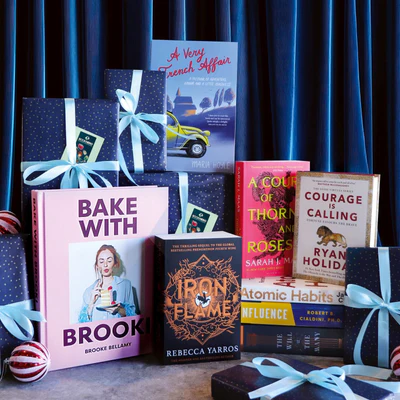
Books make wonderful thoughtful gifts and we're here to help with gift-wrapping and cards. We can even send your gift directly to your loved one.


