


1
of
1
Making Waste
Leftovers and the Eighteenth-Century Imagination
 Book Hero Magic crafted this summary to help describe this book. While it's new and still
learning, it may not be perfect - your
feedback is welcome!
Summary
Book Hero Magic crafted this summary to help describe this book. While it's new and still
learning, it may not be perfect - your
feedback is welcome!
Summary
Read More
Format: Hardback
$8900
Unit price
/
Unavailable
AVAILABLE WITH SUPPLIER
Ships from our Auckland warehouse within 4-6 weeks
Found a better price? Request a price match

Making Waste
$8900
Unit price
/
Unavailable
Book Hero Magic created this recommendation. While it's new and still learning, it may not be perfect - your feedback is welcome! IS THIS YOUR NEXT READ?
This book suits readers interested in eighteenth-century literature, cultural and intellectual history, and those fascinated by the intersection of waste, value, and meaning in Enlightenment culture.

Why was eighteenth-century English culture so fascinated with the things its society discarded? This book explains how English writers used contemporary theological and philosophical texts about unwanted and leftover matter to explore secular, literary relationships between waste and value.
This is a vivaciously written, multidimensional study of the problem and promise that waste posed to the eighteenth-century English imagination. It is surprisingly and commendably concise, given its topic, and it frames economic, political, anthropological, and historical analysis with a very fine literary sensibility--one that actively appreciates the role that imaginative writing played in the negotiation of a paradox that turns out to be constitutive of modern English identity. -- Jayne Lewis, University of California, Irvine Making Waste is a pleasure to read--vividly, gracefully, wittily written. It will be a valuable contribution to eighteenth-century literary and cultural studies. -- Cynthia Wall, University of Virginia
Book Hero Magic formatted this description to make it easier to read. While it's new and
still learning, it may not be perfect - your
feedback is welcome!
Description
Why was eighteenth-century English culture so fascinated with the things its society discarded? Why did Restoration and Augustan writers such as Milton, Dryden, Swift, and Pope describe, catalogue, and memorialise the waste matter that their social and political worlds wanted to get rid of—from the theological dregs in Paradise Lost to the excrements in "The Lady's Dressing Room" and the corpses of A Journal of the Plague Year?
In Making Waste, the first book about refuse and its place in Enlightenment literature and culture, Sophie Gee examines the meaning of waste at the moment when the early modern world was turning modern. Gee explains how English writers used contemporary theological and philosophical texts about unwanted and leftover matter to explore secular, literary relationships between waste and value. She finds that, in the eighteenth century, waste was as culturally valuable as it was practically worthless—and that waste paradoxically revealed the things that the culture cherished most.
The surprising central insight of Making Waste is that the creation of value always generates waste. Waste is therefore a sign—though a perverse one—that value and meaning have been made. Even when it appears to symbolise civic, economic, and political failure, waste is in fact restorative, a sign of cultural invigoration and imaginative abundance.
Challenging the conventional association of Enlightenment culture with political and social improvement, and scientific and commercial progress, Making Waste has important insights for cultural and intellectual history as well as literary studies.
Book Hero Magic summarised reviews for this book. While it's new and still learning, it may not be perfect - your feedback is welcome! HOW HAS THIS BEEN REVIEWED?
Praised for its insightful and original approach, Making Waste is noted for clear, accessible writing and elegant style. Critics commend Sophie Gee's ability to enliven literary and theoretical discussions on an unusual topic with fluency and engaging prose, offering valuable perspectives for literary and cultural studies.

Book Details
INFORMATION
ISBN: 9780691139845
Publisher: Princeton University Press
Format: Hardback
Date Published: 17 January 2010
Country: United States
Imprint: Princeton University Press
Audience: Tertiary education, Professional and scholarly
DIMENSIONS
Width: 152.0mm
Height: 235.0mm
Weight: 425g
Pages: 208
About the Author
Sophie Gee is assistant professor of English at Princeton University and the author of The Scandal of the Season (Scribner), a novel based on the story behind Alexander Pope's Rape of the Lock. She writes regularly for the New York Times Book Review, the Washington Post, and the Financial Times.
More from Arts & Culture
View all-
 Dylan's Pick
 -

They Bloom Because of You
Paperback$3000Elsewhere:$3600Unit price /UnavailableIn StockShips today -

-
 20% off
Great Writers and the Cats who Owned Them
Hardback$3200Usually:$3999Unit price /UnavailableIn StockShips today -

-

-

-

-

-

-

Deliver Me from Nowhere (Movie Tie-In)
Paperback$3199Elsewhere:$3999Unit price /UnavailableIn StockShips today -
 New Release
Why buy from us?
Book Hero is not a chain store or big box retailer. We're an independent 100% NZ-owned business on a mission to help more Kiwis rediscover a love of books and reading!

Service & Delivery
Our warehouse in Auckland holds over 80,000 books, toys, board games and puzzles in-stock so you're not waiting for your order to arrive from overseas.

Auckland Bookstore
We're primarily an online store, but for your convenience you can pick up your order for free from our bookstore, which is right next door to our warehouse in Hobsonville.
Our Gifting Service
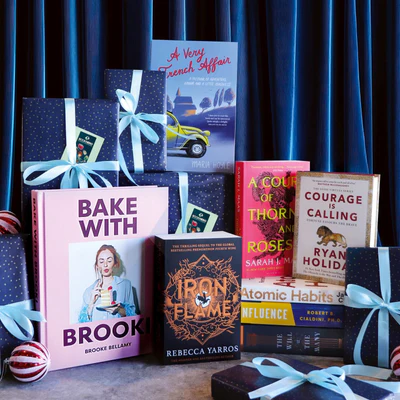
Books make wonderful thoughtful gifts and we're here to help with gift-wrapping and cards. We can even send your gift directly to your loved one.


