










1
of
1
Ai Weiwei

Ratings/reviews counts are updated frequently.
Check link for latest rating. ( 35 ratings, 4 reviews)
Brief Description
Ai Weiwei (b. 1957) is truly an artist for the twenty-first century. In his sculptures, he refashions artefacts and antiques into surprising, sometimes monumental constructions such as Template (2007): hundreds of wooden doors and windows taken from demolished Ming and Qing dynasty temples and arranged into...
Read More
Format: Paperback / softback
TEMPORARILY OUT OF STOCK
Please add to wishlist to be notified when back in stock
Sorry, we're currently out of stock of Ai Weiwei. Please add to your Wishlist and we'll send you an email as soon as it's back in stock.
Latest News
Self-Help Advice I Actually Use
My partner Alex says I read too many self-help books, and he’s probably right. To...
Jon Toogood visits Book Hero
We were so honoured to have Aotearoa's own royal rock legend Jon Toogood visit Book...
New Hero Alert! Meet Liam - our new Bookstore Hero
We’re thrilled to welcome Liam to the Book Hero team! You’ll find him in our...
Celebrating Bird of the Year 2026 with Bird Books
Today I've got a couple of INCREDIBLE bird books as well as a reading list...
Amelia's Favourite Puzzle Vibe: What Makes a Puzzle Cosy?
What makes a puzzle feel cosy? Amelia shares her favourite puzzle vibe, from bookshops and...
See more Book Hero Magic formatted this description to make it easier to read. While it's new and
still learning, it may not be perfect - your
feedback is welcome!
Description
Book Hero Magic formatted this description to make it easier to read. While it's new and
still learning, it may not be perfect - your
feedback is welcome!
Description
Ai Weiwei (b. 1957) is truly an artist for the twenty-first century. In his sculptures, he refashions artefacts and antiques into surprising, sometimes monumental constructions such as Template (2007): hundreds of wooden doors and windows taken from demolished Ming and Qing dynasty temples and arranged into a massive outdoor sculpture. As much as these materials look to the past, they also speak of the present, because never before (and probably never again) have they been available in such abundance. Like his benches carved from centuries-old temple beams, Template is a sly commentary on the speed with which China's building boom is obliterating its past. (When Template collapsed in a rainstorm two weeks after its unveiling at Documenta 12, the artist embraced its demise as a clever artistic twist.)
In China today, making art that's critical of current cultural and economic policies is not a particularly safe career move. But Ai's father, the poet Ai Qing, walked a similar path, absorbing European avant-garde styles while studying in 1930s Paris and later standing by them in the face of Communist opposition, a move that eventually led to his exile to the distant provincial town where his son Weiwei came to be born and raised. In the late 1970s, Ai Weiwei moved to Beijing, banding together with other pro-democracy artists in a loose collective known as the Stars Group. In 1981, following government retaliation against one of their exhibitions, Ai moved to New York, where he attended art school and lived the life of the bohemian for twelve years, his East Village apartment serving as a base for countless visiting Chinese artists. When his father became ill in 1993, Ai returned to China, settling in Beijing and finally taking up his art career in earnest.
Weiwei's artistic forebears belong primarily to the Western modernist avant-garde (Duchamp and Beuys are particularly relevant). But Ai has equally and increasingly been influenced by modernist architecture and contemporary urban planning, citing the need for an ideal for living in a country where runaway economic development has shown little regard for the everyday life of the individual. In stark contrast to the glass-and-steel high-rises going up around Beijing, the art galleries, ateliers, and homes Ai designs are boxy and modest, made from brick and other vernacular materials. Their resolution of Eastern and Western styles is a fitting parallel to his antique readymade sculptures.
What truly marks out Ai as a twenty-first-century artist is the multiplicity of his roles: not just artist, designer, and architect but also curator, publisher, web blogger, and compass for an entire generation of Beijing artists. He has been described more than once as the Chinese Warhol.
Book Details
INFORMATION
ISBN: 9780714848891
Publisher: Hachette Australia
Format: Paperback / softback
DIMENSIONS
Weight: 1000g
Also by Hans Ulrich Obrist
View all-

140 Artists' Ideas for Planet Earth
140 Artists' Ideas for Planet Earth is an urgent and entertaining guide to tackling the climate emergency at home, within your community, and within yourself, from some of the best artistic minds of our generation. Artists are uniquely situated to present new ideas about how we are living, the materials that make up our lives, and how we can begin...Paperback$1900Elsewhere:$2100Unit price /UnavailableAvailableShips in 4-6 weeks -

Ways of Curating
The world's most famous curator shows how we can use the process of curation outside the art world. Drawing on his own experiences and inspirations—from staging his first exhibition in his tiny Zurich kitchen in 1986 to encounters with artists, exhibition makers, and thinkers—Hans Ulrich Obrist looks to inspire all those engaged in the creation of culture. Moving from meetings...Paperback$2400Elsewhere:$2600Unit price /UnavailableAvailableShips in 4-6 weeks -

Life in Progress
World-renowned curator Hans Ulrich Obrist, for the first time, grants a private view of how a near-death experience in young childhood catapulted him towards art and artists. When Hans Ulrich was a young boy, he was knocked down by a speeding car. Hospitalized for weeks, he discovered the healing powers of art. Once he was able to travel again, he...Hardback$5500Unit price /UnavailableAvailableShips in 4-6 weeks -

Lives of the Artists, Lives of the Architects
A unique opportunity to learn about the creative lives of the world's leading artists and architects. Hans Ulrich Obrist has been conducting ongoing conversations with the world's greatest living artists since he began in Switzerland, aged 19, with Fischli and Weiss. Here he chooses nineteen of the greatest figures and presents their conversations, offering the reader intimacy with the artists...Paperback$3500Unit price /UnavailableAvailableShips in 4-6 weeks -

Cahiers d’Art 2018
The 2018 Cahiers d’Art revue revisits Miró’s works and the relationship between Miró and Cahiers d’Art through an anthology of the most beautiful texts published in the revue. It also introduces unpublished objects and pieces from the artist’s collection. The stencil Miró made for the No. 1-4 of the 1936 revue is silkscreened as this revue’s cover. The issue also...Paperback$18500Unit price /UnavailableAvailableShips in 4-6 weeks -

Christine Ljubanovic
Christine Ljubanovic's portrait photographs of famous artists, curators, critics and writers lie between classic portraits and experience reports. Developed as a complete contact sheet, they are living reports of the artists' encounters and also include the environment of the subject of the portrait. The publication shows for the first time an overview of conversation portraits by Christine Ljubanovic which have...Paperback$6099Unit price /UnavailableAvailableShips in 4-6 weeks -

Hans Ulrich Obrist, Infinite Conversations
A collection of 31 conversations Hans Ulrich Obrist has held with thinkers and scientists on art, science and philosophy In 2014, on the occasion of the 30th anniversary of the Fondation Cartier, Hans Ulrich Obrist imagined The Infinite Conversation — a title borrowed from Maurice Blanchot — a series of conversations with artists, scientists and thinkers close to the Fondation...Paperback$5399Unit price /UnavailableAvailableShips in 4-6 weeks -

Annie Leibovitz
When Benedikt Taschen asked the most important portrait photographer working today, Annie Leibovitz, to collect her pictures in a SUMO-sized book, she was intrigued by the challenge. The project took several years to develop and when it was finally published in 2014, it weighed in at 26 kg (57 pounds). This incredible collection is now available in an accessible XXL...Hardback$35000Unit price /UnavailableAvailableShips in 4-6 weeks -

London Dialogues
This volume inaugurates a new series of publications edited by three leading authors on the world's architectural and artistic scene: H.U. Obrist, Rem Koolhaas, and Stefano Boeri. A series of dialogues resulting from the first, legendary Serpentine Gallery Marathon, conducted by Hans Ulrich Obrist and Rem Koolhaas, is dedicated to London. It offers a description of one of the great...Paperback$4899Unit price /UnavailableAvailableShips in 4-6 weeks -

Edi Rama: Work (bilingual)
The oeuvre of the Albanian artist and prime minister Edi Rama is inseparable from his political career. During telephone conferences and meetings, he creates drawings and watercolours on the copies of his schedule, his work notes, on minutes, faxes, and other pieces of correspondence. The art he produces in the environs of national power forms an abstract journal, a vivid...Hardback$9900Unit price /UnavailableAvailableShips in 2-3 weeks -

Judy Chicago: Revelations
A new work from Judy Chicago, fifty years in the making: Judy Chicago: Revelations is the work she thought would never see the light of day. Her captivating narrative combatting the erasure of women from history unites seamlessly with illustrations first made in the 1970s and new work in a striking, contemporary design. Revelations is the work that Judy Chicago...HardbackSold Out -

Esther Mahlangu
A captivating exploration of the life and work of the iconic South African artist Esther Mahlangu, one of the great innovators of Pan-African Contemporary Art. 'Esther Mahlangu is one of the most important artists of our time who continues to inspire artists all over the world. Mahlangu is a visionary who brings art into society' Hans Ulrich Obrist Esther Mahlangu...HardbackSold Out
Also by Karen Smith
View all-

Shanghai: A History in Photographs, 1842 - Today
The modern city of Shanghai rose up from truly 'muddy' origins, both in the soft subsoil its foundations were built upon and its early economy based on a trade in opium, or 'foreign mud'. Forced open to the British by the unequal Treaty of Nanking in 1842, Shanghai did what it does best—it beat the odds to become a 'bawdy...Paperback$7000Unit price /UnavailableAvailableShips in 4-6 weeks
More from Arts & Culture
View all-
 Dylan's Pick
Bold Types
A tribute to 32 truly independent bookshops throughout Aotearoa New Zealand, from north of Auckland down to Dunedin, and coast to coast. Jane Ussher's photographs show every bookstore in its unique nature - including behind the counter, smoko rooms, the mess which tells the hardworking story behind the joy of matching books with customers. Jemma Moreira's careful editing has crafted...Hardback$5999Elsewhere:$7000Unit price /UnavailableIn StockShips today -

Home Again
Join rock-legend, former Shihad frontman and lead singer of The Adults, Jon Toogood in this unflinching and no-holds-barred memoir Home Again.This is more than a rock story. Toogood looks back on a 37-year career that helped define New Zealand rock music, and the personal cost that came with it. From a music-obsessed childhood in Wellington to the deafening roar of international stages, this...Paperback$3199Elsewhere:$3999Unit price /UnavailableIn StockShips today -

The Odyssey
Composed at the rosy-fingered dawn of world literature almost three millennia ago, The Odyssey is a poem about violence and the aftermath of war; about wealth, poverty and power; about marriage and family; about travellers, hospitality, and the yearning for home. This fresh, authoritative translation captures the beauty of this ancient poem as well as the drama of its narrative....Paperback$2999Elsewhere:$3599Unit price /UnavailableIn StockShips today -

The Iliad
When Emily Wilson's translation of The Odyssey appeared in 2017—revealing the ancient poem in a contemporary idiom that was "fresh, unpretentious and lean" (Madeline Miller, Washington Post)—critics lauded it as "a revelation" (Susan Chira, New York Times) and "a cultural landmark" (Charlotte Higgins, Guardian) that would forever change how Homer is read in English. Now Wilson has returned with an...Paperback$3299Elsewhere:$3799Unit price /UnavailableIn StockShips today -


Disney Moana: The Official Cookbook
Embark on a culinary adventure with Moana of Motunui with Pacific recipes inspired by Moana and Moana 2! After a long day of sailing to see how far you’ll go or keeping the demigod Maui out of trouble with Te Fiti, catch a break with the delicious dishes in Moana: The Official Cookbook! Featuring more than 50 recipes spanning the...Hardback$4499Elsewhere:$5299Unit price /UnavailableIn StockShips today -

This Angry Pen of Mine
This Angry Pen of Mine by Layne Staley invites you to dive into the untold creative world of Layne Staley, the legendary voice behind Alice in Chains. This extraordinary collection showcases his handwritten lyrics, deeply personal poetry, stunning original artwork, rare photos, fan tributes, and so much more. Step into the world of Layne Staley like never before. For the...Hardback$7299Elsewhere:$8999Unit price /UnavailableIn StockShips today -
Did I Ever Tell You This?
In this unexpected memoir, written in a creative burst of just a few months in 2022, Sam Neill tells the story of how he became one of the world’s most celebrated actors, who has worked with everyone from Meryl Streep to Isabel Adjani, from Jeff Goldblum to Sean Connery, from Steven Spielberg to Jane Campion. By his own account, his...Paperback$3799Elsewhere:$4500Unit price /UnavailableIn StockShips today -

They Bloom Because of You
Bestselling author and Instagram sensation Jessica Urlichs returns with a new collection of beautifully observed poems about the ever-evolving journey of motherhood - the hard, the magic and the fleeting. ‘A raw and honest read that makes you feel seen and understood in a way that will bring you to tears.’ - Hilary Swank ‘A book to keep close and...Paperback$3000Elsewhere:$3600Unit price /UnavailableIn StockShips today -

The Odyssey
The Odyssey by Homer is a monumental epic that has enthralled readers for centuries with its rich tapestry of adventure and human struggle. It chronicles the perilous journey of Odysseus, the cunning King of Ithaca, as he strives to return home after the fall of Troy. During this ten-year odyssey, Odysseus confronts myriad dangers, both natural and supernatural, that test...Paperback$2499Elsewhere:$2800Unit price /UnavailableIn StockShips today -

Leaves of Grass
A collectible new Penguin Classics series offers beautiful, slim, clothbound editions of ten favourite poets. In 1855, Walt Whitman published his first collection of poetry, Leaves of Grass. The volume received great praise from leading Transcendentalist poet Ralph Waldo Emerson. This encouragement led to what would become a lifelong project, as Whitman expanded and rewrote the volume until his death...Hardback$2200Elsewhere:$2400Unit price /UnavailableIn StockShips today -

Great Writers and the Cats who Owned Them
Throughout history, cats and writers have bonded together in a magical combination of comfort, companionship and inspiration. The famous authors featured here range from Samuel Johnson, whose cat Hodge dined on oysters, and Edward Lear, whose charismatic cat Foss was missing half his tail, to Margaret Mitchell, L. M. Montgomery and Dorothy L. Sayers, who rescued her kitten Blitz from...Hardback$3999Unit price /UnavailableIn StockShips today -

Vagabond
The outrageous, riotous memoir from the cult actor and star of The Rocky Horror Picture Show, Clue, and IT. Actor, rock 'n' roll singer, the prince of Halloween, confusing sex symbol. Many labels have been given to the inimitable Tim Curry over the years. All are true, and yet none are quite right. Here, for the first time, Curry reveals...Hardback$4499Elsewhere:$6000Unit price /UnavailableIn StockShips today
Why buy from us?
Book Hero is not a chain store or big box retailer. We're an independent 100% NZ-owned business on a mission to help more Kiwis rediscover a love of books and reading!

Service & Delivery
Our warehouse in Auckland holds over 100,000 books, toys, board games and puzzles in-stock so you're not waiting for your order to arrive from overseas.

Auckland Bookstore
We're primarily an online store, but for your convenience you can pick up your order for free from our bookstore, which is right next door to our warehouse in Hobsonville.
Our Gifting Service
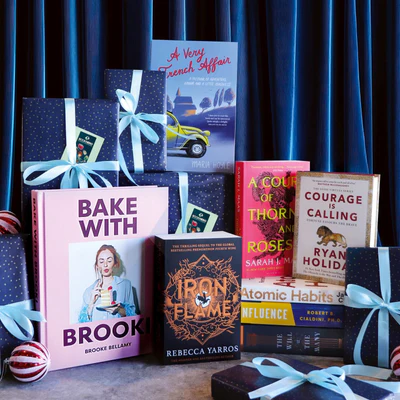
Books make wonderful thoughtful gifts and we're here to help with gift-wrapping and cards. We can even send your gift directly to your loved one.
Arts & Culture lists from the team
Explore our curated lists from our heroes to find your next read!
-
![]()
![]()
![]() Lizzy's list
Lizzy's listArts & Culture
Poetry of Aotearoa
Check out some of the amazing local talent we are spoilt with right here in Aotearoa.View the list -
![]()
![]()
![]() Lizzy's list
Lizzy's listArts & Culture
Poetry for Beginners - Where to Start
10 Books I'd recommend to someone new to reading poetry - a mix of old and new, all magical introductions to the...View the list -
![]()
![]()
![]() Lizzy's list
Lizzy's listArts & Culture
Lizzy's Favourite Books of Poetry
If I could only have 10 poetry collections to survive on for the rest of my life, these are them. Or maybe...View the list -
![]()
![]()
![]() Lizzy's list
Lizzy's listArts & Culture
Books to read for Women in Translation month!
August is Women in Translation month, but at any time of year it's worth checking out these incredible novels written by women...View the list -
![]()
![]()
![]() Shirl's list
Shirl's listArts & Culture
Inside the World of Film
Step behind the scenes of the world of filmmaking! Discover iconic directors and movie history of some of the world's memorable films.View the list -
![]()
![]()
![]() Shirl's list
Shirl's listArts & Culture
Books to Celebrate NZ Music Month
New Zealand Music Month happens every May, it's a reminder that we have so many talented musicians, singer, songwriters here in Aotearoa....View the list


