








1
of
1
Poetry After Barbarism
The Invention of Motherless Tongues and Resistance to Fascism
Series: Literature Now
Brief Description
Against a backdrop of xenophobic and ethnonationalist fantasies of linguistic purity, Poetry After Barbarism uncovers a stateless, polyglot poetry of resistance—the poetry of motherless tongues. Departing from the national and global paradigms that dominate literary history, Jennifer Scappettone traces the aesthetic and geopolitical resonance of “xenoglossic”...
Read More
Format: Paperback / softback
$7599
Unit price
/
Unavailable
AVAILABLE WITH SUPPLIER
Ships from our Auckland warehouse within 3-4 weeks
Found a better price? Request a price match

Poetry After Barbarism
$7599
Unit price
/
Unavailable
Latest News
We're Celebrating Halloween with a Board Game Party!
It's been a little while since our last team board game night, so what better...
Liam's Halloween Spook-tacular
Our newest Bookstore Hero, Liam, is a self-diagnosed horror fanatic, with a love for both books...
New Zealand Gothic and Some Wonderfully Atmospheric Novels from Aotearoa
We may be lacking in castles and moors, but we more than make up for...
What a Night! Inside Book Hero's Whirlwind ACOTAR Midnight Release
What a whirlwind the last 24 hours have been! I'm writing this running on approximately...
The Team's Long Weekend Reading
With the long weekend upon us, the team is hopefully getting some time in the...
See moreAgainst a backdrop of xenophobic and ethnonationalist fantasies of linguistic purity, Poetry After Barbarism uncovers a stateless, polyglot poetry of resistance—the poetry of motherless tongues.
 Book Hero Magic formatted this description to make it easier to read. While it's new and
still learning, it may not be perfect - your
feedback is welcome!
Description
Book Hero Magic formatted this description to make it easier to read. While it's new and
still learning, it may not be perfect - your
feedback is welcome!
Description
Against a backdrop of xenophobic and ethnonationalist fantasies of linguistic purity, Poetry After Barbarism uncovers a stateless, polyglot poetry of resistance—the poetry of motherless tongues. Departing from the national and global paradigms that dominate literary history, Jennifer Scappettone traces the aesthetic and geopolitical resonance of “xenoglossic” poetics: poetry composed in the space of contestation between national languages, concretising dreams of mending the ruptures traced to the story of Babel.
As global migration, aerial bombardment, and the wireless telegraph shrank distances with brute force during the twentieth century, visions of transcultural communication emerged in the hopes of bridging linguistic difference. At the same time, evolving Fascist ideologies denied the reality of cultural admixture and the humanity of the stranger.
Authors who write xenoglossic verse occupy languages without a perceived birthright or sanctioned education; they compose in ecstatic “orphan tongues” that rebuff nationalist ideologies, on the one hand, and globalisation, on the other, uprooting notions of belonging ensconced in nativist metaphors of milk, blood, and soil while rendering the reactionary category of the barbarian obsolete.
Raised within or in the wake of fascism, these poets practice strategic forms of literary and linguistic barbarism, proposing modes of collectivity that exceed geopolitical definitions. Studying experiments between languages by immigrant, refugee, and otherwise stateless authors—from Baroness Elsa von Freytag-Loringhoven to Emilio Villa, Amelia Rosselli, Etel Adnan, LaTasha N. Nevada Diggs, Chika Sagawa, and Sawako Nakayasu—this book explores how poetry can both represent and jumpstart metamorphosis of the shape and sound of citizenship, modelling paths toward alternative republics in which poetry might assume a central agency.
Series: Literature Now
View all-

Poetry in General
In the second half of the twentieth century, poetry leapt out of books and became an interdisciplinary public form. Poetry entered bureaucratic systems of organisation like index card catalogues; it pushed the boundaries of privately owned public parks. Keegan Cook Finberg argues that poetry became an increasingly capacious force during this period because it could speak directly to the degradation...Paperback$6699Unit price /UnavailableAvailableShips in 3-4 weeks -

Poetry After Barbarism
Against a backdrop of xenophobic and ethnonationalist fantasies of linguistic purity, Poetry After Barbarism uncovers a stateless, polyglot poetry of resistance—the poetry of motherless tongues. Departing from the national and global paradigms that dominate literary history, Jennifer Scappettone traces the aesthetic and geopolitical resonance of “xenoglossic” poetics: poetry composed in the space of contestation between national languages, concretising dreams of...Paperback$7599Unit price /UnavailableAvailableShips in 3-4 weeks -

Writing Backwards
Contemporary fiction has never been less contemporary. Midcentury writers tended to set their works in their own moment, but for the last several decades critical acclaim and attention have fixated on historical fiction. This shift is particularly dramatic for writers of colour. Even as the literary canon has become more diverse, cultural institutions have celebrated Black, Asian American, Latinx, and...Paperback$6699Unit price /UnavailableAvailableShips in 3-4 weeks -

Big Fiction
In the late 1950s, Random House editor Jason Epstein would talk jazz with Ralph Ellison or chat with Andy Warhol while pouring drinks in his office. By the 1970s, editors were poring over profit-and-loss statements. The electronics company RCA bought Random House in 1965, and then other large corporations purchased other formerly independent publishers. As multinational conglomerates consolidated the industry,...Paperback$5699Unit price /UnavailableAvailableShips in 3-4 weeks -
Bookishness
Twenty-first-century culture is obsessed with books. In a time when many voices have joined to predict the death of print, books continue to resurface in new and unexpected ways. From the proliferation of "shelfies" to Jane Austen–themed leggings and from decorative pillows printed with beloved book covers to bookwork sculptures exhibited in prestigious collections, books are everywhere and are not...Paperback$5699Unit price /UnavailableAvailableShips in 3-4 weeks -
American Literature's War on Crime
While the United States was building the world's largest prison system, Americans were reading crime novels. What did it mean to read crime fiction in a "tough-on-crime" era? How were fictional stories about crime linked to cultural narratives about criminality, class, and race? What did novels have to do with the making of mass imprisonment in America? Theodore Martin offers...Paperback$12500Unit price /UnavailableAvailableShips in 2-3 weeks -

We the Platform
Web 2.0 gave us the online world as we know it today. Popularised in 2004, it redefined the internet as social, a platform for self-expression and data gathering. The ensuing proliferation of user-generated content such as social media posts, fan fiction, self-published novels, and Instagram poetry has spurred a host of anxieties about the end of literature. Yet contemporary literary...Paperback$6699Unit price /UnavailableAvailableShips in 3-4 weeks
Book Details
INFORMATION
ISBN: 9780231212090
Publisher: Columbia University Press
Format: Paperback / softback
Date Published: 14 October 2025
Country: United States
Imprint: Columbia University Press
Illustration: 47 b&w illustrations
Audience: Professional and scholarly
DIMENSIONS
Width: 156.0mm
Height: 235.0mm
Weight: 250g
Pages: 408
About the Author
Jennifer Scappettone is a professor of literature, creative writing, gender studies, and environmental humanities at the University of Chicago. She is the author of Killing the Moonlight: Modernism in Venice (Columbia, 2014) and the cross-genre verse books From Dame Quickly and The Republic of Exit 43. She is also the translator of Locomotrix: Selected Poetry and Prose of Amelia Rosselli.
More from Arts & Culture
View all-
 Dylan's Pick
Bold Types
A tribute to 32 truly independent bookshops throughout Aotearoa New Zealand, from north of Auckland down to Dunedin, and coast to coast. Jane Ussher's photographs show every bookstore in its unique nature - including behind the counter, smoko rooms, the mess which tells the hardworking story behind the joy of matching books with customers. Jemma Moreira's careful editing has crafted...Hardback$5999Elsewhere:$7000Unit price /UnavailableIn StockShips tomorrow -
 New Release
I’ll Believe in Anything
From Jacob Tierney, the creator of Heated Rivalry, in partnership with Brendan Brady and Accent Aigu, comes I’ll Believe in Anything, an official and complete collection of annotated scripts for the biggest cultural sensation of the year, with all new exclusive behind-the-scenes content.Based on Rachel Reid’s blockbuster Game Changers book series, Heated Rivalry premiered on Crave and HBO in late 2025 and immediately took the world by storm. I’ll...Hardback$5499Elsewhere:$6000Unit price /UnavailableIn StockShips tomorrow -

Home Again
Join rock-legend, former Shihad frontman and lead singer of The Adults, Jon Toogood in this unflinching and no-holds-barred memoir Home Again.This is more than a rock story. Toogood looks back on a 37-year career that helped define New Zealand rock music, and the personal cost that came with it. From a music-obsessed childhood in Wellington to the deafening roar of international stages, this...Paperback$2700Elsewhere:$3999Unit price /UnavailableIn StockShips tomorrow -
 20% off
The Odyssey
Composed at the rosy-fingered dawn of world literature almost three millennia ago, The Odyssey is a poem about violence and the aftermath of war; about wealth, poverty and power; about marriage and family; about travellers, hospitality, and the yearning for home. This fresh, authoritative translation captures the beauty of this ancient poem as well as the drama of its narrative....Paperback$2400Elsewhere:$3599Unit price /UnavailableIn StockShips tomorrow -
 21% off
The Iliad
When Emily Wilson's translation of The Odyssey appeared in 2017—revealing the ancient poem in a contemporary idiom that was "fresh, unpretentious and lean" (Madeline Miller, Washington Post)—critics lauded it as "a revelation" (Susan Chira, New York Times) and "a cultural landmark" (Charlotte Higgins, Guardian) that would forever change how Homer is read in English. Now Wilson has returned with an...Paperback$2600Elsewhere:$3799Unit price /UnavailableIn StockShips tomorrow -


Disney Moana: The Official Cookbook
Embark on a culinary adventure with Moana of Motunui with Pacific recipes inspired by Moana and Moana 2! After a long day of sailing to see how far you’ll go or keeping the demigod Maui out of trouble with Te Fiti, catch a break with the delicious dishes in Moana: The Official Cookbook! Featuring more than 50 recipes spanning the...Hardback$4499Elsewhere:$5299Unit price /UnavailableIn StockShips tomorrow -
 New Release
A Life in Lyrics
Freddie Mercury was one of the greatest showmen of the twentieth century. With his unparalleled voice and searing on-stage energy, he was a great pretender, a killer queen and a champion of the world. But behind the glamour lived a musician and lyricist talented beyond measure, and the creative force behind one of the most culturally significant and musically diverse...Hardback$5000Elsewhere:$6500Unit price /UnavailableIn StockShips tomorrow -

 New Release
Birdlands
A rare, intimate journey into the wild islands where Aotearoa's birds live beyond the reach of most human lives. In the most remote outposts of Aotearoa, our islands are populated not with people, but with birds. From the storm-lashed Subantarctic Islands in the deep south to the scattered volcanic islands of Tikapa Moana/Hauraki Gulf in the north, Birdlands offers a...Hardback$4199Elsewhere:$5000Unit price /UnavailableIn StockShips tomorrow -
 21% off
This Angry Pen of Mine
This Angry Pen of Mine by Layne Staley invites you to dive into the untold creative world of Layne Staley, the legendary voice behind Alice in Chains. This extraordinary collection showcases his handwritten lyrics, deeply personal poetry, stunning original artwork, rare photos, fan tributes, and so much more. Step into the world of Layne Staley like never before. For the...Hardback$5800Elsewhere:$8999Unit price /UnavailableIn StockShips tomorrow -
 New Release
Beautiful Chaos
Featuring five exclusive new poems, this stunning foil-embossed hardback edition is a collector's item and a gorgeous gift. The Instant Sunday Times Bestseller. Selected poems on motherhood from bestselling author and Instagram poet, Jessica Urlichs. 'Reading Jess's poems makes me feel like she's somehow reached into my own personal reflections and articulated them in a way I never could.' –...Hardback$3299Elsewhere:$4000Unit price /UnavailableIn StockShips tomorrow -
 New Release
Split Enz
'My favourite band. Ever! And certainly the best dressed.' Sam Neill Split Enz were never designed to fit. Emerging from art school mischief in early-1970s New Zealand, they turned pop into surreal theatre: costume, character and melody colliding in a rock band that refused to behave like one. At the centre of that vision was Noel Crombie—percussionist, performer and the...Hardback$5199Elsewhere:$6500Unit price /UnavailableIn StockShips tomorrow -

Mah Jong Player's Companion
Since the arrival on the market of Patricia Thompson and Betty Maloney's two previous books, The Game of Mah Jong Illustrated and Improve Your Mah Jong, a wide range of hands from many parts of the world has been sent to them. In this player's companion, the authors have put together a cross-filled reference guide where over 120 hands, illustrated...Paperback$1999Elsewhere:$2299Unit price /UnavailableIn StockShips tomorrow
Why buy from us?
Book Hero is not a chain store or big box retailer. We're an independent 100% NZ-owned business on a mission to help more Kiwis rediscover a love of books and reading!

Service & Delivery
Our warehouse in Auckland holds over 100,000 books, toys, board games and puzzles in-stock so you're not waiting for your order to arrive from overseas.

Auckland Bookstore
We're primarily an online store, but for your convenience you can pick up your order for free from our bookstore, which is right next door to our warehouse in Hobsonville.
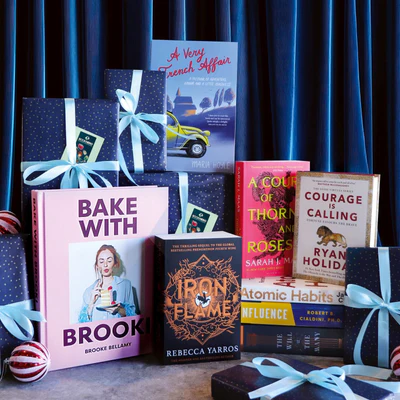
Our Gifting Service
Books make wonderful thoughtful gifts and we're here to help with gift-wrapping and cards. We can even send your gift directly to your loved one.
Arts & Culture lists from the team
Explore our curated lists from our heroes to find your next read!
-
![]()
![]()
![]() Lizzy's list
Lizzy's listArts & Culture
Poetry of Aotearoa
Check out some of the amazing local talent we are spoilt with right here in Aotearoa.View the list -
![]()
![]()
![]() Lizzy's list
Lizzy's listArts & Culture
Poetry for Beginners - Where to Start
10 Books I'd recommend to someone new to reading poetry - a mix of old and new, all magical introductions to the...View the list -
![]()
![]()
![]() Lizzy's list
Lizzy's listArts & Culture
Lizzy's Favourite Books of Poetry
If I could only have 10 poetry collections to survive on for the rest of my life, these are them. Or maybe...View the list -
![]()
![]()
![]() Lizzy's list
Lizzy's listArts & Culture
Books to read for Women in Translation month!
August is Women in Translation month, but at any time of year it's worth checking out these incredible novels written by women...View the list -
![]()
![]()
![]() Shirl's list
Shirl's listArts & Culture
Inside the World of Film
Step behind the scenes of the world of filmmaking! Discover iconic directors and movie history of some of the world's memorable films.View the list -
![]()
![]()
![]() Shirl's list
Shirl's listArts & Culture
Books to Celebrate NZ Music Month
New Zealand Music Month happens every May, it's a reminder that we have so many talented musicians, singer, songwriters here in Aotearoa....View the list


